

Application of Blowers in the Wastewater Treatment Industry
Application of Blowers in the Wastewater Treatment Industry
Blowers (also commonly referred to as aeration blowers or blower fans in the industry) are among the most energy-intensive and critical pieces of dynamic equipment in wastewater treatment plants (WWTPs). The power consumption of aeration system blowers in a typical WWTP can account for 50%~70% of the plant's total electricity usage. Therefore, they are not merely "air-blowing devices" but rather the "power heart" of the entire facility.
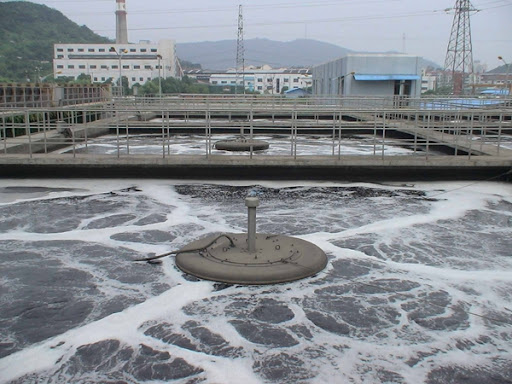
I. Core Function — Why WWTPs Cannot Do Without Blowers?
Wastewater treatment, especially the mainstream Activated Sludge Process, relies on aerobic microorganisms to consume pollutants (degrading BOD/COD, nitrification for nitrogen removal, etc.). For these microorganisms to survive and function, they require Dissolved Oxygen (DO). The role of blowers is:
To deliver compressed air to the bottom of aeration tanks → generate bubbles through diffusers → dissolve oxygen into the water → maintain DO within the target range of approximately 1.5~3 mg/L.
Simultaneously, the airflow provides water mixing and agitation, preventing sludge sedimentation and eliminating dead zones.
II. Main Application Scenarios (Overview Table)
Process Stage
Role of Blower
Common Types
Biological Tank Aeration (Aeration Tank)
Primary Use — Supplies oxygen to aerobic tanks, oxidation ditches, AAO, MBBR, SBR, etc., maintaining DO levels.
Roots, Multistage Centrifugal, High-Speed Centrifugal (incl. Magnetic/Air Suspension)
Equalization Tank / Balancing Tank Agitation
Introduces air from the bottom for mild agitation, preventing sediment deposition, homogenizing influent, and suppressing odors.
mall Roots / Regenerative Blowers
Filter Backwashing (Air Scour)
During periodic backwashing of sand/activated carbon filters, compressed air is used for air scouring to loosen trapped solids on the media surface.
Roots, Centrifugal
Sludge Treatment
Oxygen supply for sludge digesters, ventilation for sludge drying beds, pneumatic conveying of powdered chemicals (lime/activated carbon, etc.).
Roots, Regenerative Blowers
Odor Collection & Biofilter
Provides induced draft for odor collection hoods/piping, or supplies air to biofilter beds to maintain aerobic conditions.
Induced Draft Fans / Regenerative Blowers
Air Lift / Pneumatic Conveying
Uses compressed air for liquid lifting (air lift pumps) or dry chemical conveying.
Roots
Among these, biological tank aeration consumes the vast majority of blower runtime and energy.
III. Common Blower Types and Selection Comparison
Wastewater aeration blowers primarily fall into two categories: Positive Displacement (Constant Flow) vs. Centrifugal (Constant Pressure):
1️⃣ Roots Blower — The Most Common "Workhorse"
Item Description
Principle
Positive displacement: Two tri-lobe/double-lobe rotors mesh to force gas transfer; flow rate ∝ speed.
Pressure Range
Medium to high pressure, typically 30~100 kPa (≈ sufficient for 3~10 m water depth aeration).
Core Advantages
Stable airflow — flow remains nearly constant even as backpressure rises (unaffected by clogged pipes or rising water levels); simple, robust structure; relatively low cost; excellent continuous operation capability.
Drawbacks
Higher noise levels (requires silencers + sound enclosures); lower energy efficiency compared to new suspension types; cost-effective for small flows, but less efficient for large flows.
Typical Applications
Small to medium WWTPs (<10,000~50,000 m³/day), industrial wastewater stations, retrofit projects replacing centrifugal blowers to avoid surge issues.
The "hard characteristic" of Roots blowers is why they remain prevalent in the industry: when diffusers and pipelines clog over time → resistance increases → centrifugal blowers lose flow or surge, while Roots blowers maintain stable airflow.
2️⃣ Multistage Low-Speed Centrifugal Blower
Robust structure, high reliability, simple maintenance.
Suitable for medium airflow (100~300 m³/min) with relatively stable pressure requirements.
Acceptable part-load efficiency, but overall energy efficiency lags behind high-speed models.
3️⃣ Single-Stage High-Speed Centrifugal Blower (Including Gear-Driven)
High airflow, high efficiency, suitable for large municipal plants (>30,000~50,000 m³/day and above).
Requires inlet guide vanes (IGV) or VFD for flow control; demands high manufacturing precision and strict air filtration.
Higher initial investment, but optimal full-load efficiency.
4️⃣ Air Suspension / Magnetic Levitation Centrifugal Blower — The New Energy-Saving Champion
Item Characteristics
Principle
Impeller supported by non-contact air bearings or magnetic bearings, minimizing friction.
Energy Efficiency
Saves 20%~40% electricity compared to traditional Roots blowers (depending on conditions).
Advantages
Oil-free, ultra-low vibration/noise, PLC intelligent control, minimal maintenance.
Drawbacks
High initial cost (approx. 2~3× that of Roots); more sensitive to high temperature/humidity/dust environments; requires VFD as standard.
Applications
Medium to large WWTPs, projects with high electricity costs/emission reduction pressures, facilities requiring automated operations.
Quick Selection Rule of Thumb (Industry Standard)
Scale
Preferred Direction
Small (<1,000~2,000 m³/d)
Roots Blower (best cost-performance)
Small-Medium (2,000~20,000 m³/d)
Roots or Air Suspension (balance electricity cost vs. CAPEX)
Large (>30,000~50,000 m³/d)
Single-stage High-Speed Centrifugal / Magnetic Levitation (efficiency priority)
Require constant flow despite resistance fluctuations? → Choose Positive Displacement (Roots); Large flow with stable backpressure? → Choose Centrifugal.
IV. How to Determine Key Selection Parameters?
Selection is not arbitrary; core inputs include:
Process Oxygen Requirement (AOR/SOR) → Converted to standard air supply Gs (m³/min).
Reference simplified formula:Gs = Qs / (0.28 × EA), where Qs is Standard Oxygen Demand, EA is Oxygen Transfer Efficiency of diffusers.
Aeration Tank Water Depth → Determines minimum discharge pressure (≈ ρgh + diffuser head loss + piping loss + safety margin).
Diffuser Type: Fine bubble disc diffusers (resistance ~3~5 kPa) vs. Coarse bubble tube diffusers (lower resistance) — directly impacts pressure requirement.
Variable Load Range: Significant diurnal/seasonal fluctuations in flow/load → requires VFD or wider stable operating range.
Noise Limits & Installation Space: Underground WWTPs are extremely sensitive to noise/vibration.
V. Operational Energy Saving — Money Saved on Blowers is Profit
Measure
Description
Variable Frequency Drive (VFD)
Adjusts airflow based on real-time DO / ammonia nitrogen feedback, avoiding "blind full-speed blowing all day."
Precision Aeration System
SCADA/IoT linked to DO probes → automatically adjusts blower speed/number of units running; energy savings of 15%~30% are common.
Regular Diffuser Maintenance
Clogged diffuser membranes → surge in resistance → blowers forced to higher pressure → sharp rise in power consumption and unstable airflow; managing cleaning/replacement cycles directly impacts energy use.
Parallel Redundancy Configuration
One large + one small, or N+1 unit combination, keeping blowers running in their high-efficiency zone instead of one large blower idling at 40% load.
Heat Recovery (Niche Scenarios)
Compressor heat can be recovered for sludge heating/building heating.
VI. Common Fault Signals (Operations Perspective)
Gradually decreasing airflow, weaker tank surface agitation → Diffuser clogging / pipe leakage / inlet filter clogging / belt slippage.
Abnormal vibration/sudden noise increase → Bearing wear, rotor imbalance due to scaling, loose foundation bolts.
Abnormally high current → Rising system backpressure (diffuser clog), obstructed discharge side, voltage issues.
Abnormal oil level/high oil temperature → Lubrication system alarm; Roots blowers require particularly close monitoring.