
Application of Tension Sensor SOPZL-107 in Textile Industry
Application of Tension Sensor SOPZL-107 in Textile Industry
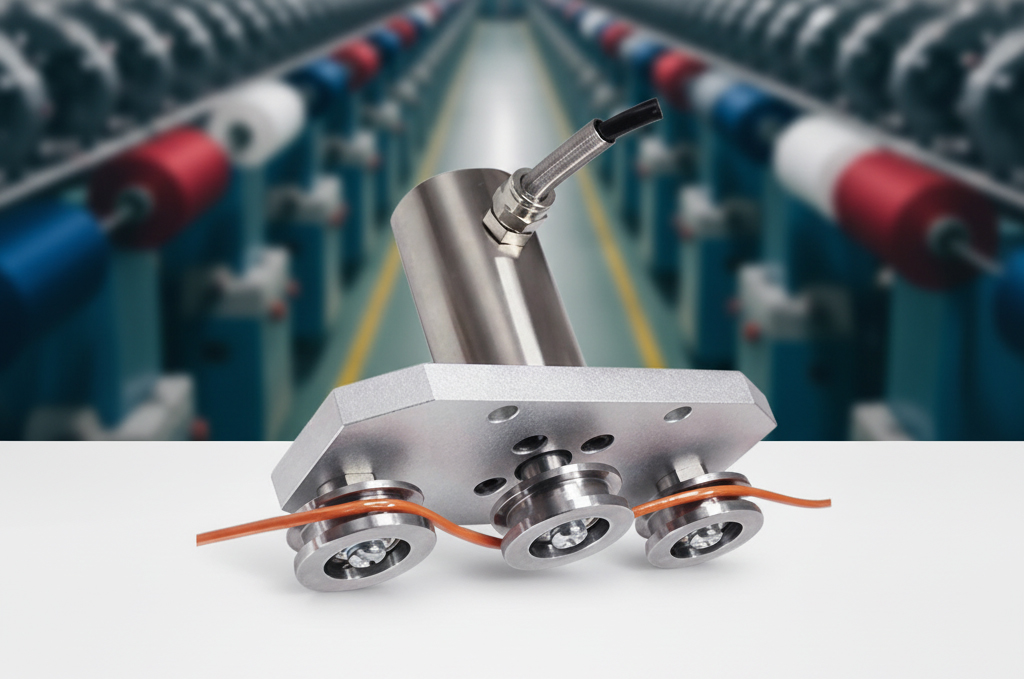
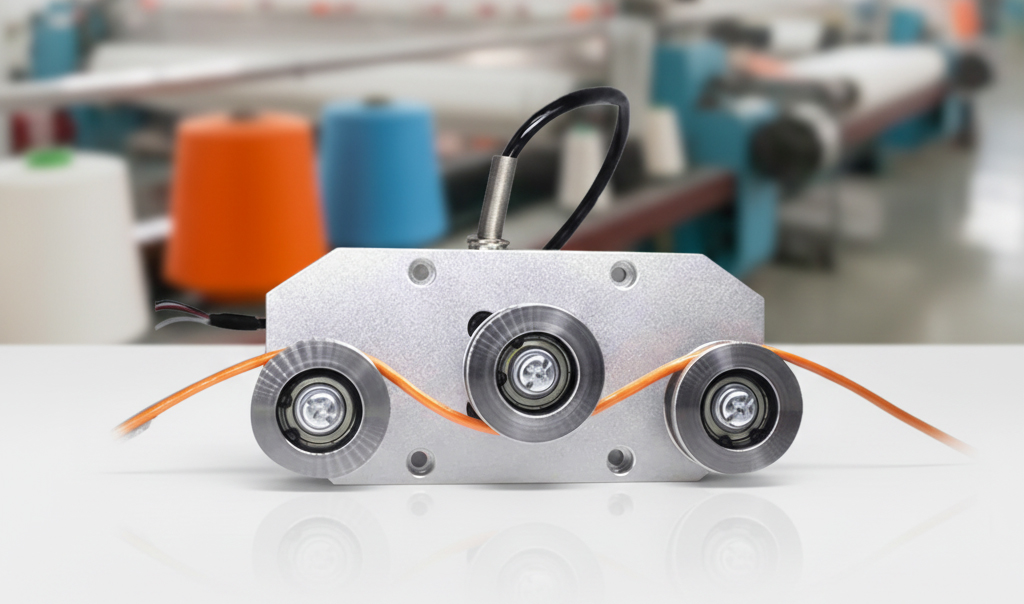
In the whole process of modern textile production, whether the tension of yarn and silk thread is stable or not directly determines the quality of finished fabric, production efficiency and raw material loss control. Three-roller tension sensor, with its accurate real-time tension detection and stable and reliable running performance, has long been an indispensable key equipment in textile weaving, spinning, warping, dyeing and finishing, laying a solid foundation for intelligent and high-end upgrading of textile industry. This three-pulley tension sensor is designed with a special three-point winding structure: the yarn passes through three groups of high-precision guide wheels, and the tension of the wire will be directly transmitted to the built-in high-precision strain measurement induction unit in the production process, and the mechanical tension will be converted into a standard electrical signal for output in real time.
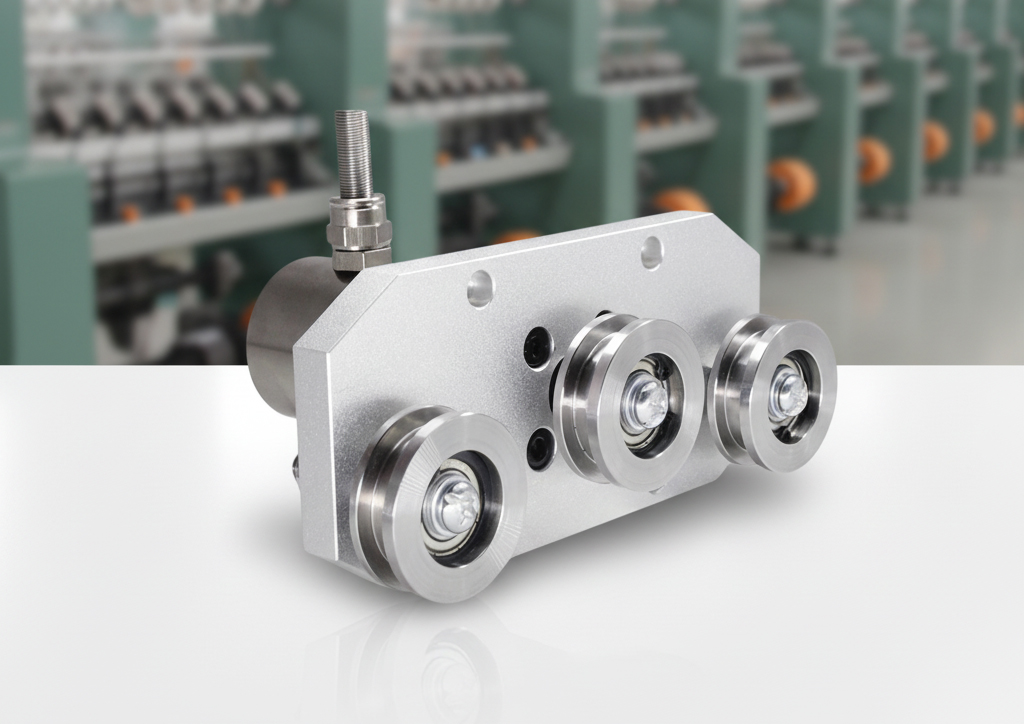
This kind of tension sensor specially designed for textile scenes has multiple adaptation advantages:
1. Excellent detection accuracy: the high-sensitivity sensing core can realize millisecond capture of slight tension change, with accurate measurement and good linearity, and is perfectly suitable for various textile wires such as fine denier yarn, high-strength industrial yarn and elastic yarn;
2. Exclusive wear-resistant structure: the guide wheel is made of wear-resistant and scratch-resistant materials to avoid damaging the yarn surface. At the same time, the bearing runs smoothly and has minimal resistance, which will not cause additional interference to the tension of the original yarn;
3. Sturdy and durable to adapt to the industrial environment: the aluminum alloy integrated fuselage is dustproof and corrosion-proof, and can withstand the dust and temperature and humidity changes in the textile workshop for a long time and continuously work with high intensity;
4. Convenient installation and debugging: compact structure and flexible installation, which can be quickly integrated into various textile equipment such as winder, water jet loom, warp knitting machine, warping machine, covering yarn machine, etc., and adapt to the transformation and upgrading of old and new production lines.
Deep application of tension sensor in textile industry chain
1. Spinning and twisting process In the production process of roving, spinning and twisting, the tension sensor monitors the traveling tension of yarn in real time, and cooperates with the control system to realize automatic tension compensation, so as to prevent the yarn from stretching deformation and uneven thickness, ensure the uniform strength and consistent twist of single yarn from the source, greatly reduce the breakage rate and improve the grade of finished spinning products.
2. Warping and sizing procedures The warping process requires extremely high uniformity of warp tension, and the tension sensor can ensure that the tension of all warp yarns on the warping beam remains constant, so as to avoid loose warp beam edges and local tension deviation. Precise tension control in sizing process ensures uniform and stable sizing and effectively improves subsequent weaving efficiency.
3. Weaving and knitting production Whether it is woven fabric or warp-knitted or weft-knitted products, stable yarn tension is the key to smooth fabric surface, uniform texture and stable size. The tension sensor is equipped with automatic tension control system, which can be dynamically adjusted in real time in high-speed weaving state, so as to eliminate the defects of crosspiece, sparse road and cloth surface, and significantly improve the quality of high-end grey cloth, home textile fabrics and knitted garments.
4. Dyeing and finishing, rewinding and finishing of finished products. In dyeing, setting, winding and rewinding, uneven tension easily leads to tensile deformation, color difference and uneven winding of fabrics. The closed-loop tension control of the tension sensor ensures the constant tension of the fabric, prevents the fabric from wrinkling, stretching and shrinking, ensures the dimensional stability and appearance of the finished product, and at the same time helps the efficient winding and improves the packaging regularity of the finished product.
5. Manufacturing of industrial special textiles In the field of high-end special textiles such as high-strength industrial fiber, aramid fiber, carbon fiber, safety belt and medical textile fabric, the precision of tension control is strict, and the high-precision tension sensor can realize accurate and stable measurement and control from a very small range to a large range, meeting the production standards of high-end special textiles with high strength, high performance and high consistency.
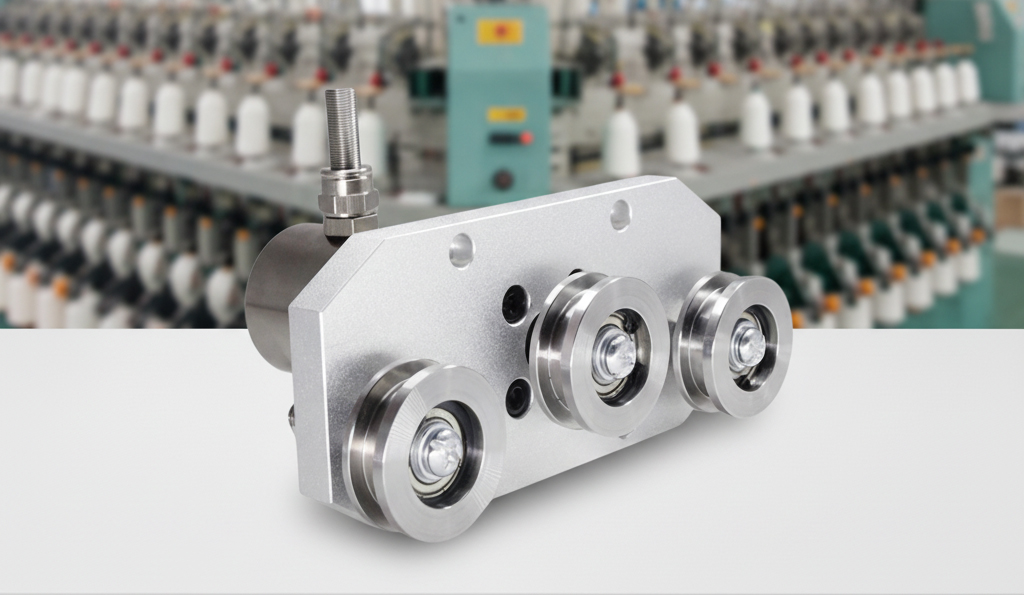
The Core Value Promotion of Tension Sensor for Textile Industry
1. Quality leap: the tension in the whole process is constant and controllable, the fabric defect rate is greatly reduced, and the smoothness, color fastness and dimensional stability of the fabric are comprehensively improved, helping enterprises to build high-end textile products and enhance the core competitiveness of the market;
2. Cost reduction and efficiency improvement: the frequency of yarn breakage and downtime, rework and repair is greatly reduced, the loss of yarn raw materials is effectively reduced, the equipment is adapted to high-speed operation, and the production capacity is significantly improved;
3. Intelligent upgrade: tension data is collected, uploaded and visually presented in real time, which is convenient for production personnel to trace parameters and analyze data, promote the automation, digitization and unmanned transformation of textile workshop, and realize lean production management;
4. Flexible production adaptation: quickly adapt to yarn production with different materials, different thicknesses and different processes, and change and debugging are simple and convenient, which perfectly adapts to the demand of multi-variety, small batch and fast delivery in the textile industry;
5. Extend the service life of the equipment: stable and uniform tension output, reduce the impact and load fluctuation of equipment parts, reduce equipment wear, prolong the service life of the whole textile machine and reduce maintenance costs.