

Global Linear Sensor Market: An In-Depth Analysis
Global Linear Sensor Market: An In-Depth Analysis
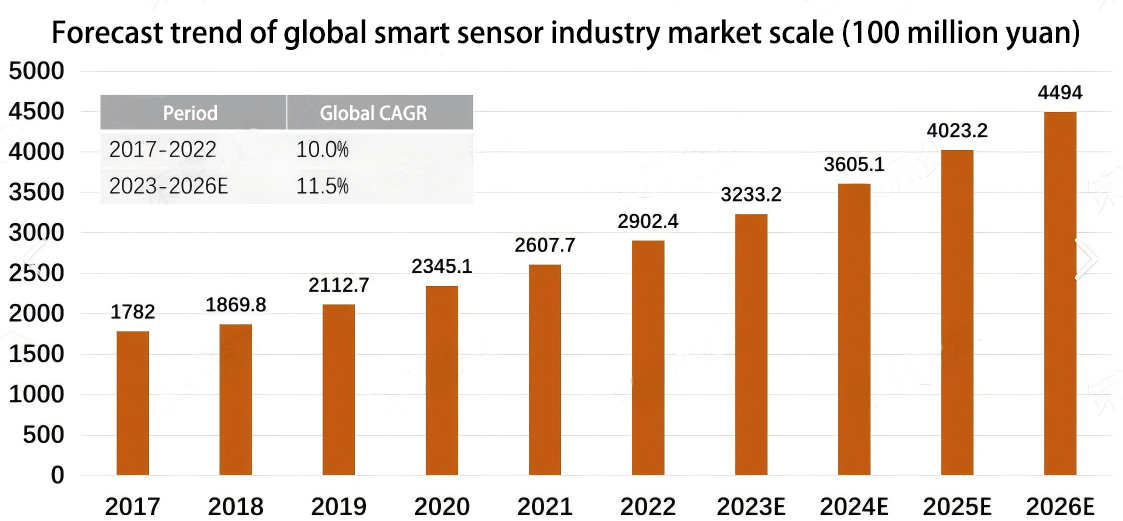
The global linear sensor market is a critical component of the broader industrial automation and precision measurement landscape. Characterized by its essential role in enabling high-accuracy positional feedback, this market is experiencing steady growth, driven by the relentless march of Industry 4.0, the expansion of robotics, and the escalating demand for quality control across manufacturing sectors.
Market Definition and Key Segments
Linear sensors are transducers that convert linear displacement or position into an electrical signal. Their precision, reliability, and versatility make them indispensable in applications where micron-level accuracy is non-negotiable. The market can be segmented along several lines:
By Technology: Key technologies include:
Inductive Sensors: Robust, contactless solutions ideal for harsh environments, detecting metallic objects without physical contact.
Capacitive Sensors: Capable of detecting both metallic and non-metallic objects, offering high resolution but sensitive to environmental factors.
Optical Encoders (Linear): Provide extremely high resolution and accuracy, widely used in CNC machinery and semiconductor manufacturing.
Magnetostrictive Sensors: Known for their long-stroke capability, robustness, and high accuracy, commonly found in hydraulic cylinder positioning.
LVDT (Linear Variable Differential Transformer): A mature, highly reliable, and contact-based technology for precise measurement of linear position.
By Application: The primary application areas are Industrial Automation, Robotics, Machine Tools, Automotive Assembly, and Aerospace.
Key Market Drivers
The Industry 4.0 Revolution: The shift towards smart factories is the most potent driver. Linear sensors are the "eyes and hands" of cyber-physical systems, providing the real-time positional data required for predictive maintenance, process optimization, and seamless human-machine interaction. The integration of Industrial IoT (IIoT) necessitates sensors with embedded diagnostics and networking capabilities, pushing innovation in the market.
Proliferation of Robotics and CNC Machinery: Both collaborative and industrial robots rely on linear sensors for precise movement control and end-effector positioning. Similarly, the demand for complex, high-tolerance components in aerospace and medical devices fuels the adoption of advanced CNC machines, which are heavily dependent on high-resolution linear encoders.
Stringent Quality and Safety Regulations: In industries like automotive and pharmaceuticals, regulatory mandates for 100% inspection and traceability are pushing manufacturers to integrate sophisticated measurement systems, where linear sensors play a central role.
Miniaturization in Electronics and Semiconductor: The production of smaller, more powerful semiconductors and consumer electronics requires fabrication equipment with nanometer-level precision, a domain where specialized linear encoders are critical.
Regional Landscape
The global market exhibits distinct regional dynamics:
Asia-Pacific: Dominates the market and is expected to witness the highest growth rate. This is fueled by massive manufacturing hubs in China, Japan, and South Korea, heavy investments in automation, and a booming automotive and electronics sector.
Europe and North America: Mature markets characterized by a high concentration of OEMs and end-users in the automotive, aerospace, and medical technology sectors. Growth here is driven by the modernization of existing industrial infrastructure and the adoption of advanced robotics.
Competitive Landscape and Future Outlook
The market is fragmented, with a mix of long-established industrial automation giants and specialized technology providers. Key players include companies like Keyence Corp., SICK AG, Balluff GmbH, TE Connectivity, and Heidenhain GmbH. Competition is intense, revolving around product innovation (higher accuracy, smaller form factors, enhanced connectivity), price, and global service and support networks.
Looking ahead, the market's trajectory points towards:
Integration with AI and Data Analytics: Sensors will evolve from mere data providers to intelligent nodes capable of pre-processing data and identifying patterns for predictive analytics.
Increased Ruggedization: Demand for sensors capable of withstanding extreme temperatures, pressures, and corrosive environments will grow, particularly in energy and heavy industries.
Wireless Connectivity: To reduce installation complexity and cost in expansive factories, wireless-enabled linear sensors will gain significant traction.
In conclusion, the global linear sensor market is a dynamic and technologically advanced sector, fundamentally underpinning modern manufacturing. Its continued evolution is inextricably linked to the broader trends of automation, digitalization, and the unceasing pursuit of precision and efficiency in industrial processes.