

High pressure ring blower: the "oxygen supply core" of sewage treatment, which helps to purify and improve water quality
Sewage treatment is the key link to protect the ecological environment and ensure the recycling of water resources, and aeration, as the core step of sewage treatment process, directly determines the efficiency and quality of sewage purification. With the advantages of stable wind pressure, controllable energy consumption and reliable operation, high-pressure blower replaces traditional aeration equipment and is widely used in municipal sewage treatment, industrial sewage treatment, rural sewage treatment and other scenes, providing sufficient oxygen for microbial degradation of pollutants, becoming an indispensable "oxygen supply heart" in sewage treatment system, and promoting sewage treatment to upgrade to high efficiency, energy saving and environmental protection. The core function of high-pressure blower (also known as high-pressure blower and vortex air pump) in sewage treatment is aeration and oxygen supply. Its working principle is essentially different from that of fish pond aeration, and it pays more attention to adapting to the complex working conditions of sewage treatment to achieve the dual effects of efficient oxygen transfer and water disturbance.
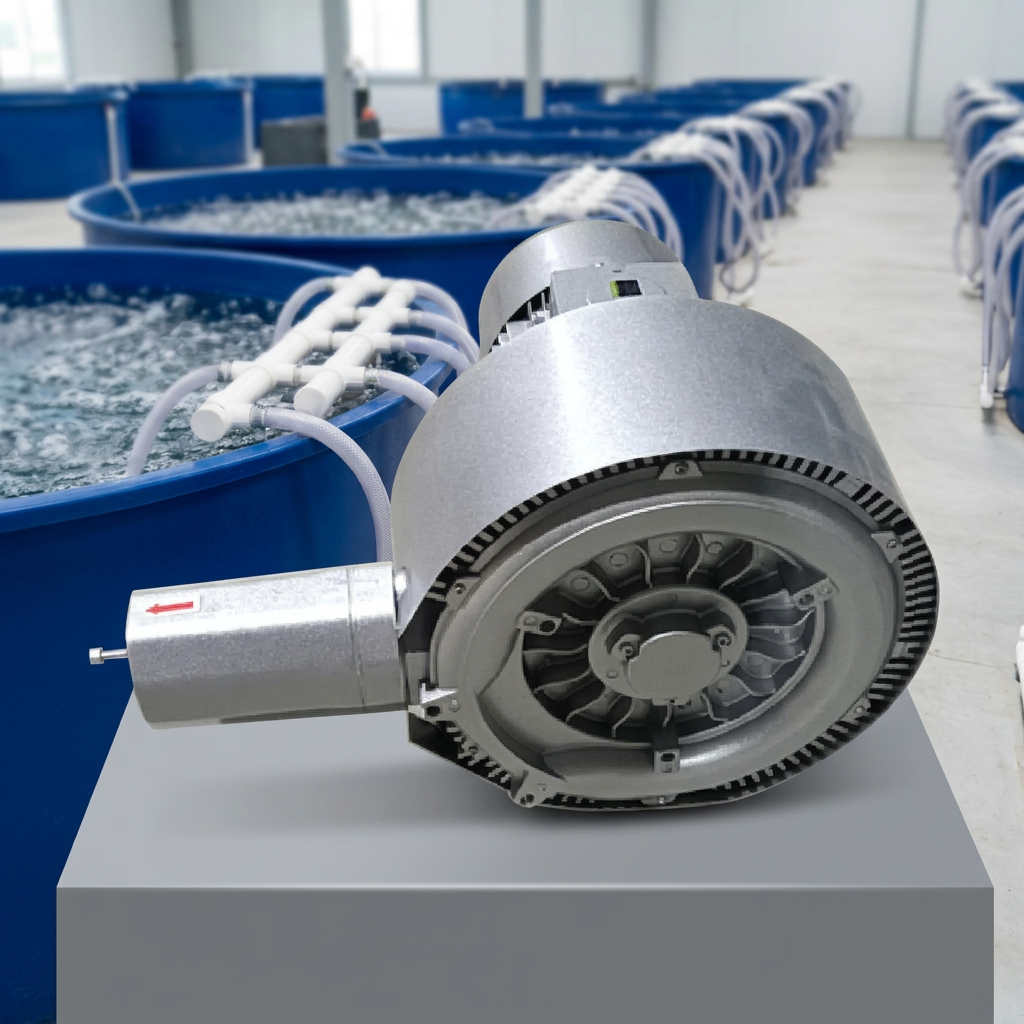
In the sewage treatment system, the high-pressure blower generates high-pressure airflow through the high-speed rotation of the impeller, pressurizes the air, and then transports it to the aeration device (such as microporous aerator, aeration tray, aeration hose, etc.) at the bottom of the aeration tank through the gas pipeline, and uniformly releases it into the sewage in the form of tiny bubbles. These microbubbles are small in diameter, large in specific surface area, and slow to rise in sewage, which can form sufficient gas-liquid contact with sewage, dissolve oxygen into sewage efficiently, and provide sufficient "energy" for aerobic microorganisms that degrade pollutants in the aeration tank.
At the same time, in the process of bubble rising, it will drive sewage to convection up and down and fully stir, break the stratification phenomenon of sewage, make microorganisms fully contact with pollutants. in sewage, accelerate the metabolic activities of microorganisms, and promote the decomposition and transformation of pollutants-decompose organic pollutants into harmless substances such as carbon dioxide and water, and convert ammonia nitrogen into nitrate, so as to realize the purification treatment of sewage and ensure that the treated water quality meets the national discharge standards. In addition, the high-pressure air flow of the high-pressure blower can effectively prevent the aeration device from blocking, reduce the sludge accumulation at the bottom of the pool, and maintain the stable operation of the sewage treatment system. Compared with traditional aeration equipment such as Roots blower and centrifugal blower, high-pressure blower has obvious application advantages in sewage treatment, which adapts to the core requirements of various sewage treatment scenarios. First, high efficiency and energy saving, reducing operating costs.
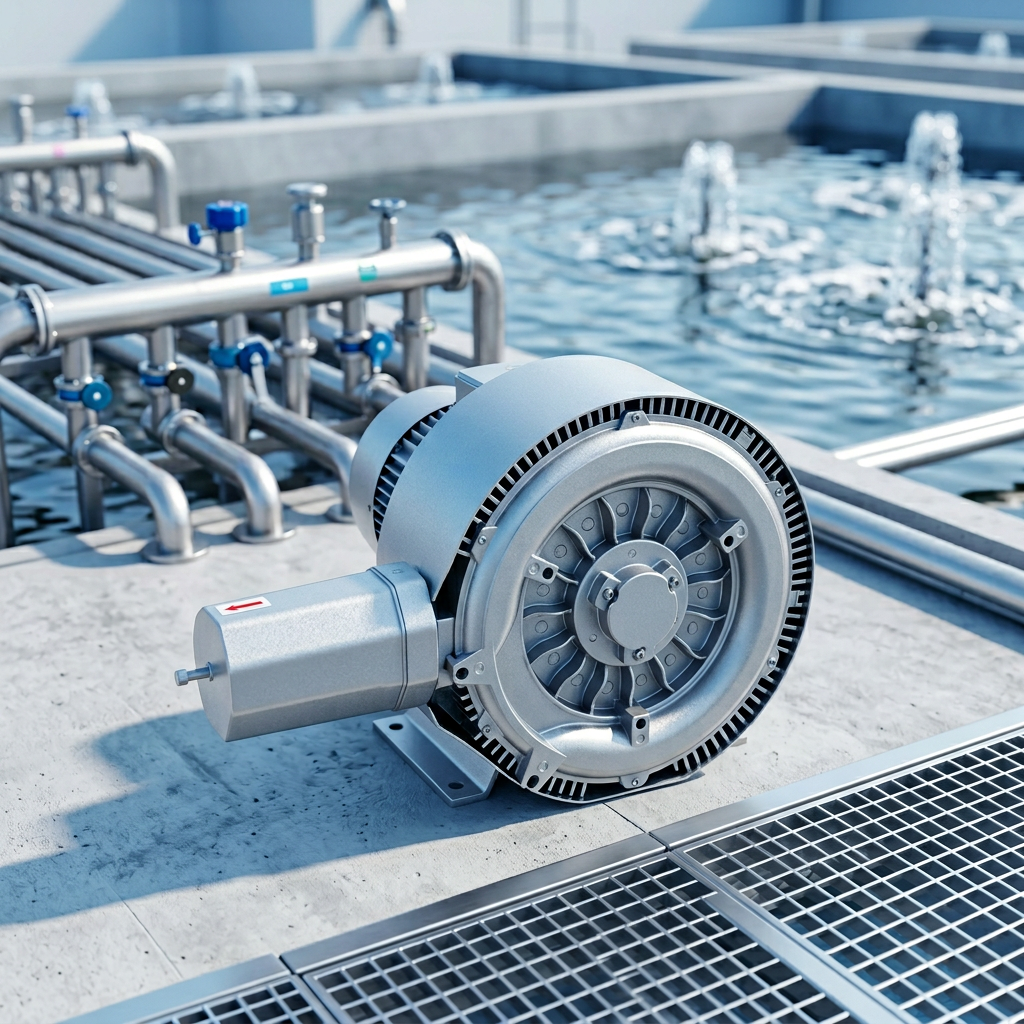
The high-pressure blower adopts oil-free vortex structure, which has high operating efficiency, stable wind pressure and low energy consumption. Under the same aeration, the energy consumption is 20%-30% lower than that of the traditional roots blower, especially suitable for energy-sensitive scenes such as small and medium-sized sewage treatment plants and rural sewage treatment stations. For example, to treat 1000 m/d domestic sewage, the daily energy consumption can be controlled at 50-80 degrees by high-pressure blower aeration, which can save 15-25 degrees of electricity compared with traditional equipment, and the long-term operation can greatly reduce the sewage treatment cost.
Secondly, the aeration is uniform and the purification effect is better. The air flow output by the high-pressure blower is stable, and uniform and fine micro bubbles can be generated through the aeration device. The gas-liquid contact efficiency can reach over 85%, which effectively increases the dissolved oxygen content in sewage (it can be stably maintained at 2-4mg/L to meet the growth requirements of aerobic microorganisms), and avoids the problems of incomplete treatment and low water quality compliance rate caused by local hypoxia. For industrial wastewater (such as wastewater from food processing, printing and dyeing, papermaking and other industries), the high-pressure blower can adjust the air volume according to the wastewater concentration to meet the aeration demand of high-concentration organic wastewater to ensure the complete degradation of pollutants.
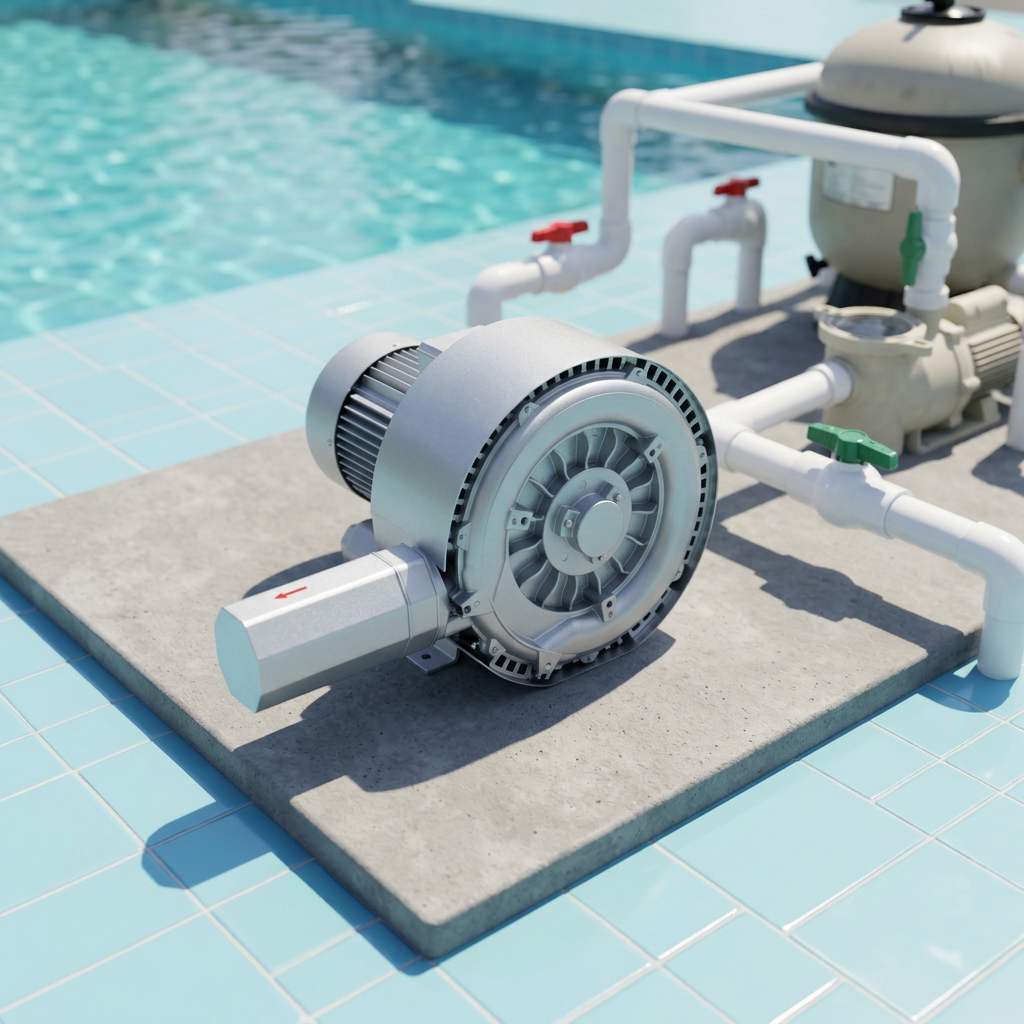
Third, the operation is stable and the maintenance is convenient. The high-pressure blower has simple structure, no complex moving parts and oil-free operation design, which avoids the secondary pollution of sewage by oil pollution and meets the environmental protection requirements of sewage treatment. The equipment is installed in the ground machine room, far away from the sewage pool, avoiding problems such as corrosion and soaking, and the failure rate is much lower than that of traditional underwater aeration equipment.
Daily maintenance only needs to clean the air inlet filter regularly, check the pipeline tightness, check the noise and temperature of the fan operation, without the operation of professional technicians, and the maintenance cost is low, which can effectively reduce the downtime of the equipment and ensure the continuous and stable operation of the sewage treatment system. Fourthly, it has strong adaptability and can flexibly cope with different working conditions. The air volume and air pressure of the high-pressure blower can be flexibly adjusted according to the sewage treatment scale, sewage concentration and the size of the aeration tank.
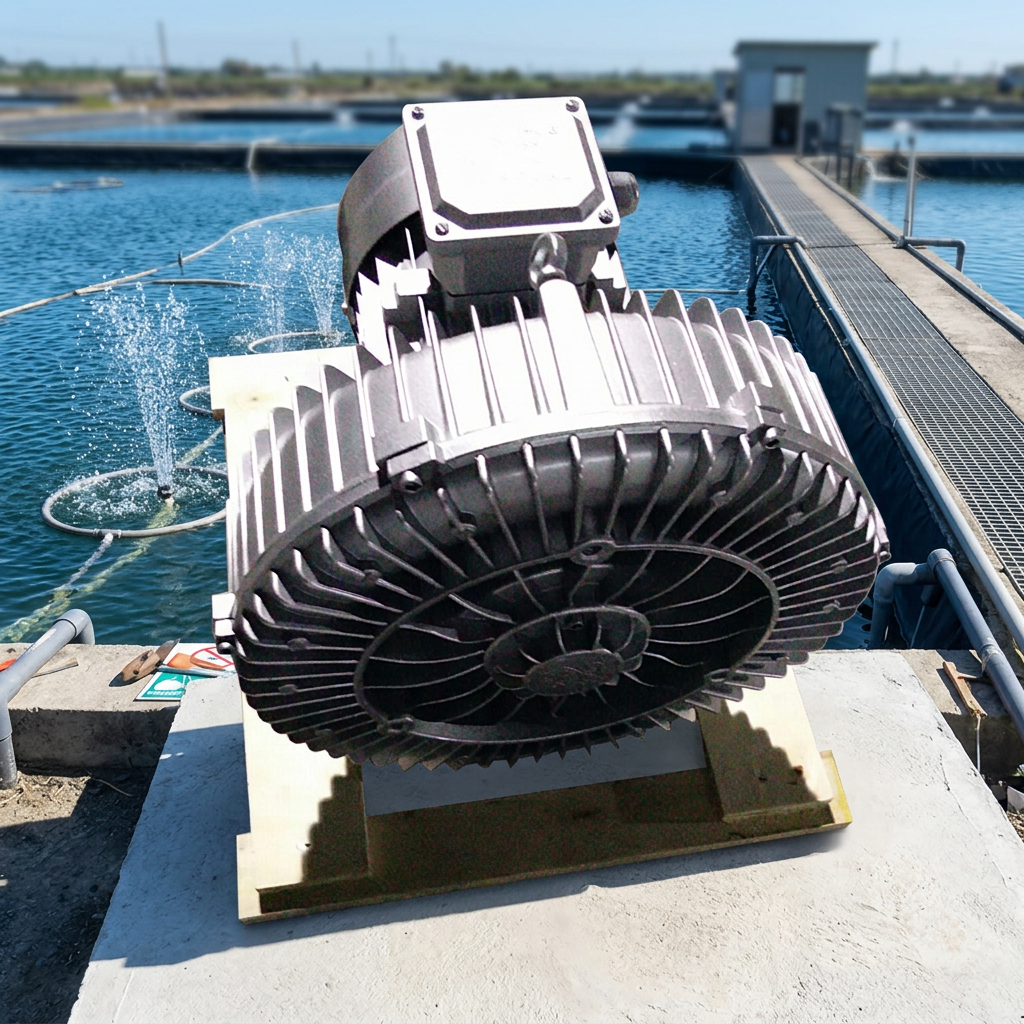
Whether it is a large aeration tank in a municipal sewage treatment plant or a small aeration device in a decentralized sewage treatment station in rural areas, whether it is normal-temperature sewage or high-temperature corrosive industrial wastewater, it can be adapted through selection, and at the same time, it can be matched with a frequency conversion control system to realize automatic air volume adjustment, and the oxygen supply intensity can be adjusted in real time according to the change of dissolved oxygen in sewage, so as to further optimize energy consumption and purification effect.
In the actual sewage treatment application, the selection, installation and daily operation and maintenance of high-pressure blower directly affect the aeration effect, treatment efficiency and service life of equipment, so it is necessary to operate scientifically in combination with specific scenes.
When selecting the type, three factors should be considered:
first, the scale of sewage treatment, and the required air volume should be calculated according to the daily sewage treatment volume and the volume of aeration tank. Generally, the air volume per cubic meter of sewage should be 0.3-0.5m/min, and 10%-15% air volume redundancy should be reserved to deal with the fluctuation of sewage concentration and the aging of equipment; Second, the quality of sewage. When dealing with high-concentration organic wastewater and corrosive wastewater, it is necessary to choose high-pressure and high-volume models, and the fan material should be corrosion-resistant stainless steel (such as 316L) to avoid corrosion damage;
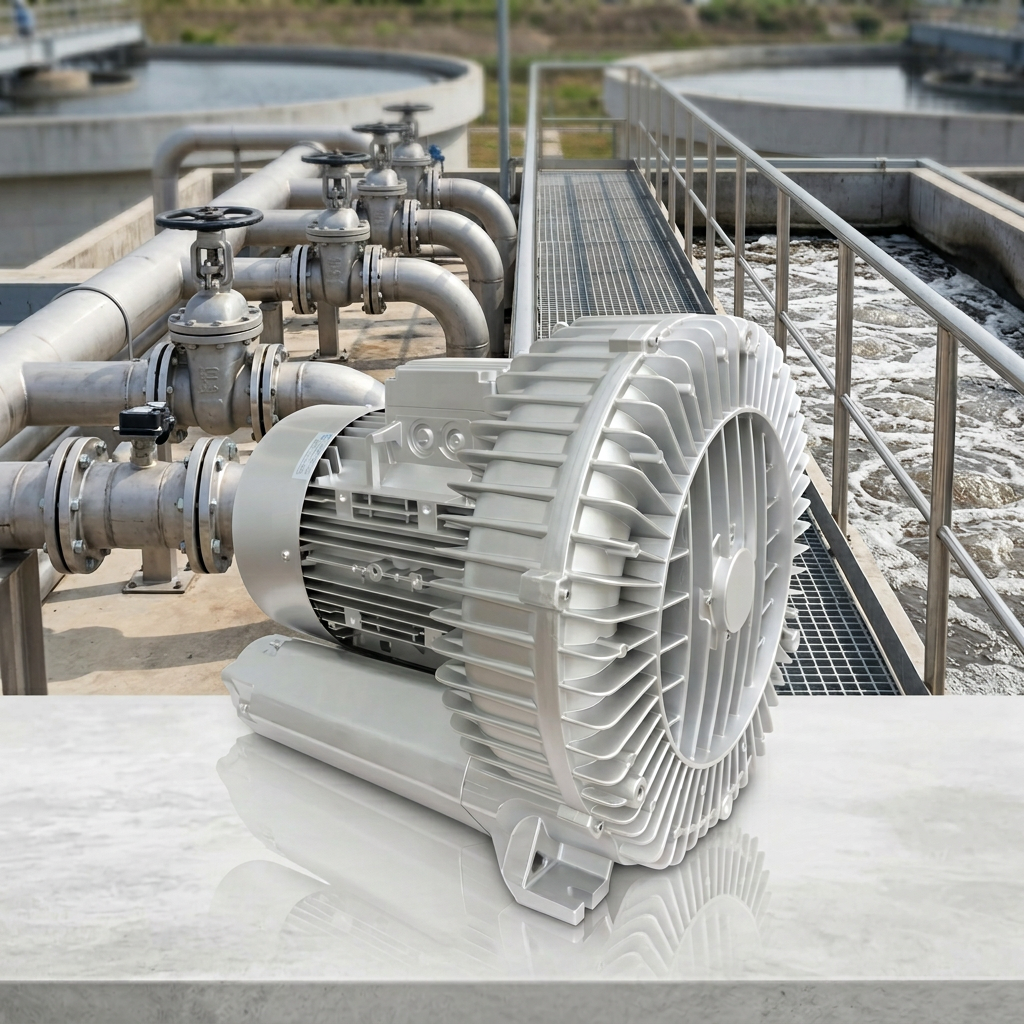
The third is aeration mode. When micropore aeration is adopted, the machine with wind pressure of 40-80kPa should be selected to ensure that bubbles can penetrate the sewage layer and realize uniform aeration. In terms of installation, attention should be paid to ventilation, heat dissipation and corrosion prevention of the fan room to prevent the fan from being affected with damp, exposed to the sun or contacting with corrosive gases; The gas transmission pipeline should be tightly sealed to reduce gas leakage loss, and at the same time, a check valve should be installed to prevent sewage from flowing backwards into the fan and damaging the equipment; Aeration devices should be uniformly arranged at the bottom of the aeration tank, and the spacing should be controlled at 1.5-2.5m to ensure that there is no dead angle in aeration and improve the gas-liquid contact efficiency.
During use, it is necessary to regularly monitor the dissolved oxygen content in sewage, and adjust the operating parameters of the fan according to the monitoring results to avoid energy waste caused by excessive air volume or substandard treatment caused by insufficient air volume. Daily operation and maintenance should focus on three points:
first, clean the air inlet filter regularly, once every 1-2 weeks to prevent dust and debris from entering the fan, wearing the impeller and blocking the air passage;
Second, check the running state of the fan regularly, monitor the noise, temperature, wind pressure and other parameters of the fan, and stop the machine in time for troubleshooting in case of abnormality to avoid overload operation of the equipment;
Third, regularly check the aeration device and gas transmission pipeline, clean up the sludge and sundries on the surface of the aerator, check the leakage point of the pipeline, conduct a comprehensive overhaul every year, and replace the aging parts to ensure the long-term stable operation of the equipment.
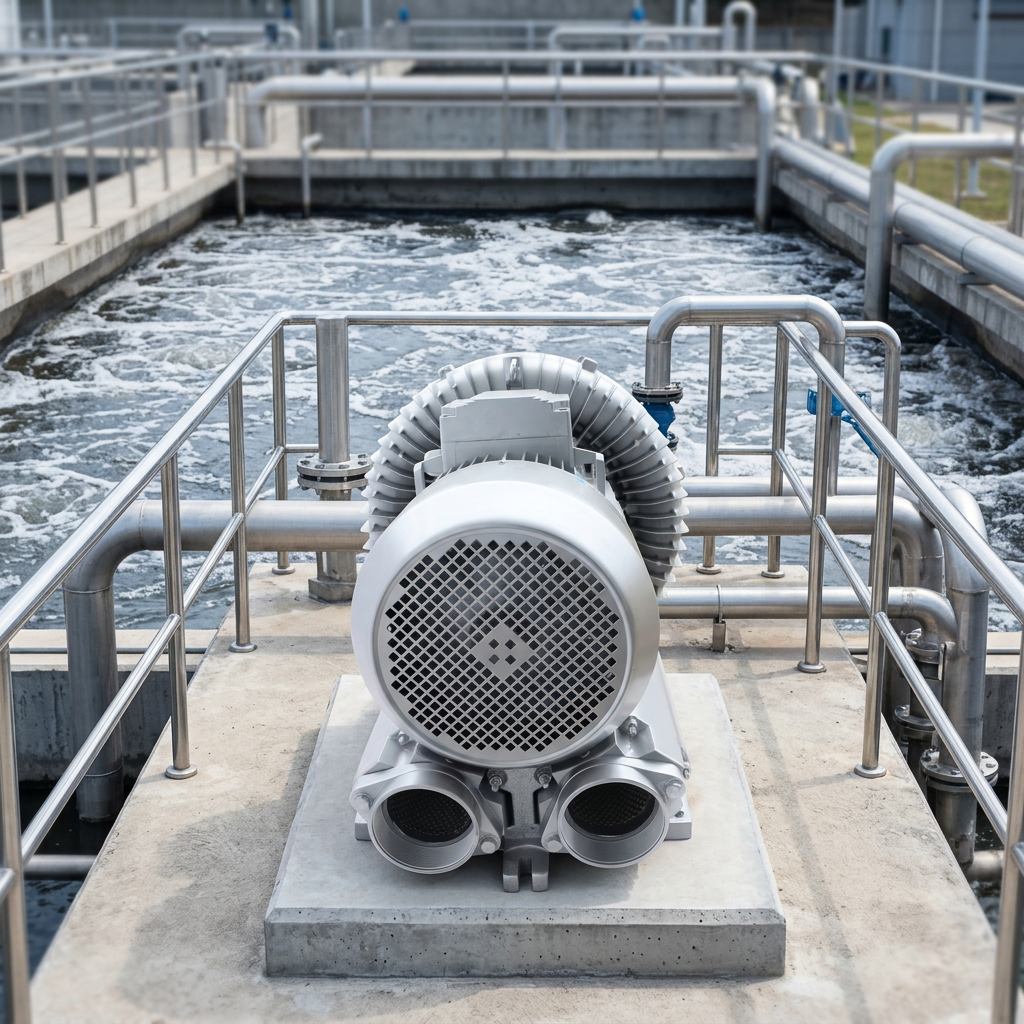
With the continuous improvement of environmental protection requirements, the sewage treatment industry is transforming into "energy-saving, intelligent and efficient", and the application scenarios of high-pressure blowers are constantly expanding, which are not only widely used in municipal, industrial and rural sewage treatment, but also suitable for sewage reuse, sludge treatment and other subdivision scenarios.
As the core oxygen supply equipment of the sewage treatment system, the high-pressure blower not only improves the sewage purification efficiency and reduces the operating cost, but also helps the sewage treatment industry to achieve the goal of "reducing pollution and carbon", promote the recycling of water resources and protect the ecological environment. In the future, with the continuous optimization of technology, the high-pressure blower will be combined with intelligent monitoring system to realize automatic monitoring of dissolved oxygen and intelligent adjustment of air volume, further improve the intelligent level of sewage treatment and inject more scientific and technological strength into the development of environmental protection.