

Linear displacement sensor is used to measure plant growth
Application of linear displacement sensor in Plant growth monitoring
Plant growth monitoring is the core link of modern agricultural scientific research and precision agricultural management. Traditional plant height measurement relies on manual scale reading, which has some disadvantages, such as low efficiency, large error and continuous monitoring. With the rapid development of smart agriculture, Linear Displacement Sensor is becoming the key technical equipment for plant phenotypic research and automatic greenhouse management with its high precision, non-contact measurement and real-time data acquisition capabilities.
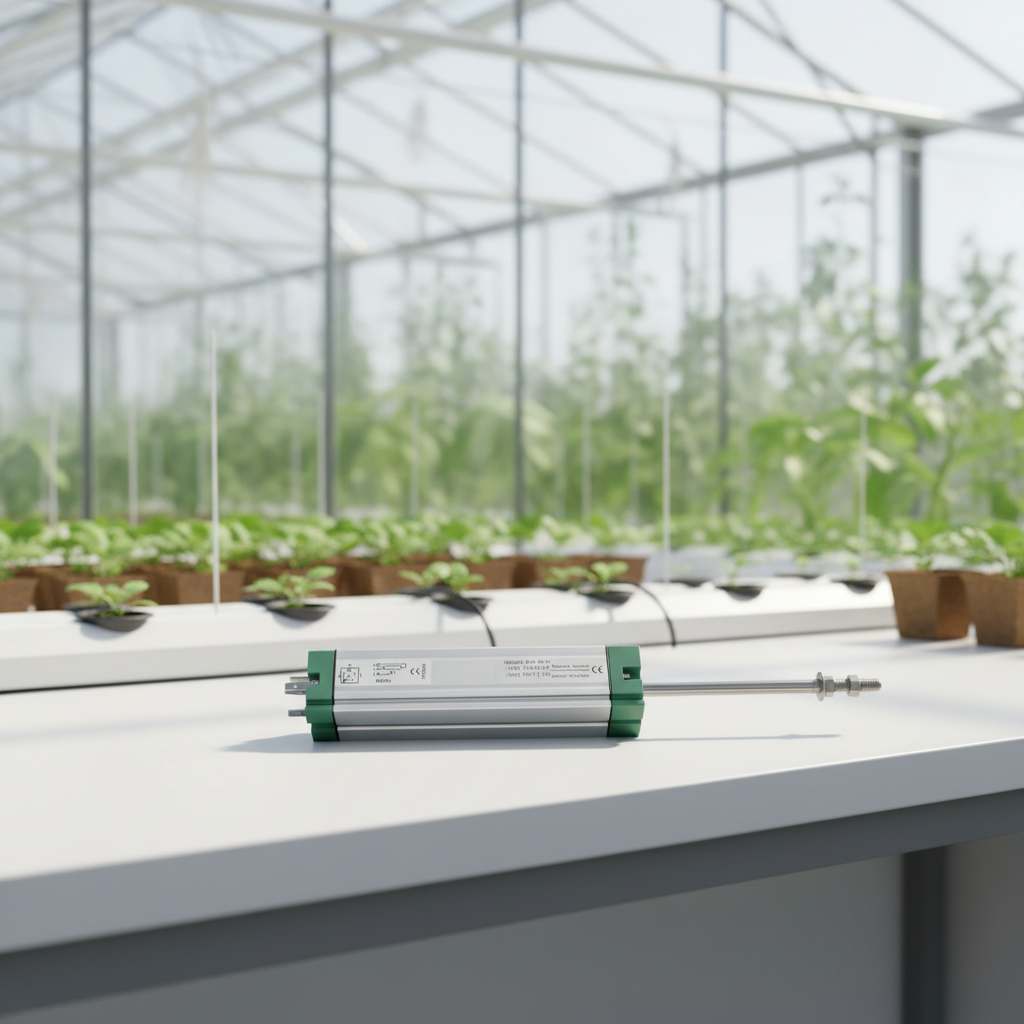
In the growth research of monocotyledonous crops such as corn, rice and wheat, the linear displacement sensor is installed above the top of the crop, and the plant height growth rate is automatically calculated by measuring the distance change between the sensor and the top of the plant in real time. The system can record continuously for 24 hours, capturing the circadian growth rhythm and photoperiod response characteristics.
Technical advantages:
Avoid mechanical damage to plants by manual measurement.
Millimeter-level accuracy to identify growth stagnation or abnormality
The growth-environment response model is established in cooperation with environmental sensors.
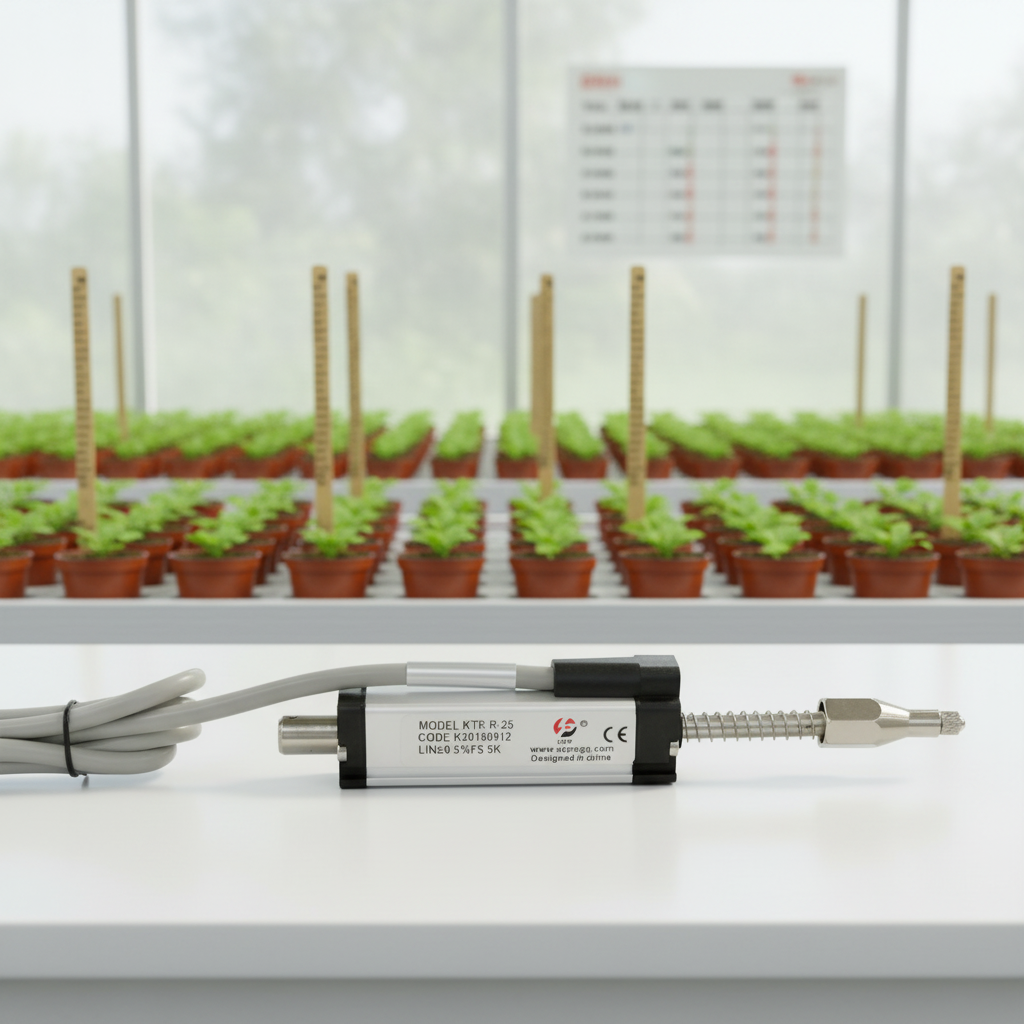
Aiming at tomato, cucumber, citrus and other fruit crops, a miniature pull rope displacement sensor is used to bind to the fruit surface to monitor the fruit diameter change in real time. This technology can accurately record the fruit development curve and provide data support for irrigation decision-making and harvest time prediction.
As a "precision scale" for plant growth monitoring, linear displacement sensor is promoting the transformation of agricultural scientific research from empirical judgment to data-driven. With the continuous decline of sensor cost and the popularization of Internet of Things technology, this technology will play an increasingly important role in the fields of facility agriculture, accelerated breeding and smart orchards, and provide solid technical support for ensuring food security and sustainable agricultural development.