

Principle, advantages, installation and application of LVDT
Principle, advantages, installation and application of LVDT
LVDT is a non-contact inductive precision displacement sensor, which can convert the linear mechanical displacement of the measured object into an electrical signal which is in strict linear proportion to the stroke and can be measured and transmitted. It is the core detection element in the field of industrial precision measurement and automatic closed-loop control.
First, the core working principle The core structure of LVDT consists of three parts: a primary excitation coil, two secondary induction coils connected in series symmetrically and reversely, and an axially movable high permeability iron core (the iron core is rigidly/follow-up connected with the measured object).
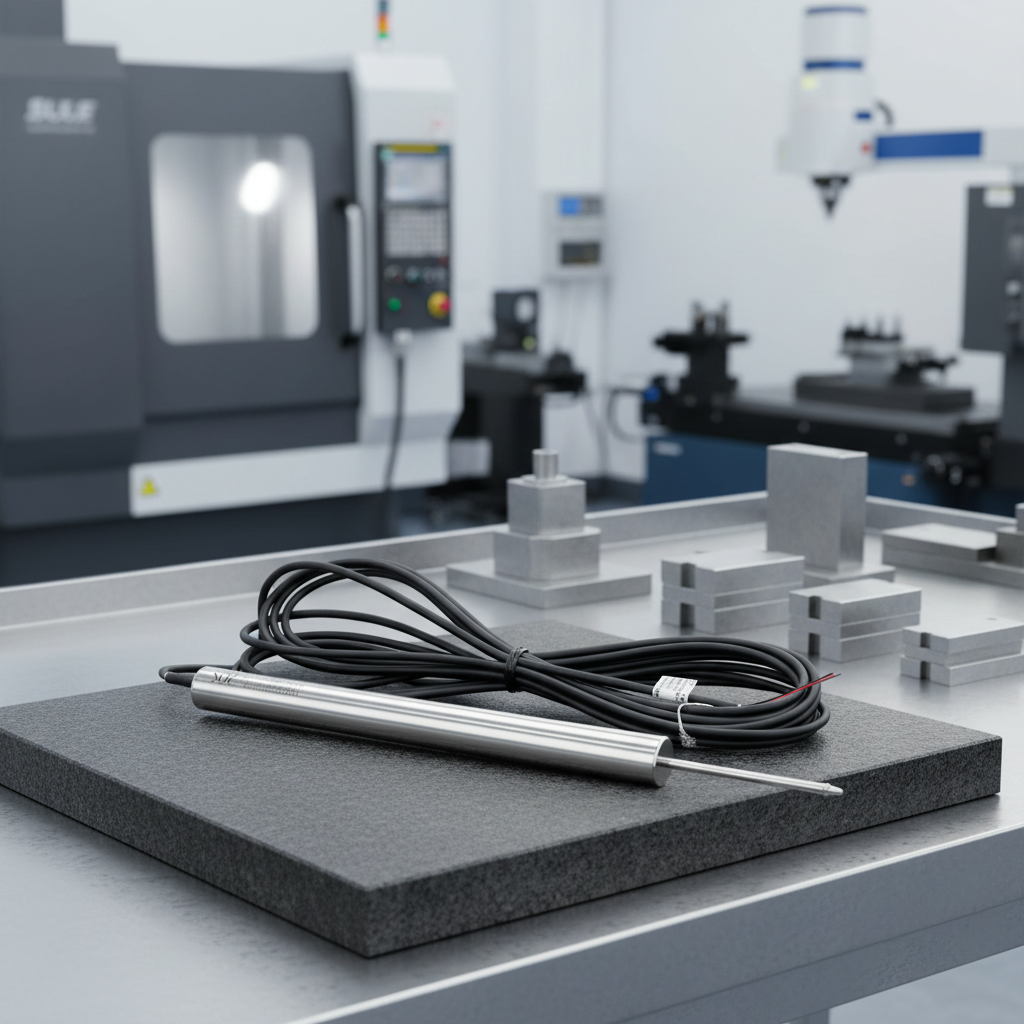
1. A high-frequency AC excitation signal is applied to the primary coil, and an alternating magnetic field will be generated inside the coil;
2. When the iron core is in the middle zero position of the coil, the electromotive forces induced by the two secondary coils are equal, and the differential output signal after reverse series connection is 0;
3. When the iron core moves axially with the measured object, the iron core deviates from the zero point, and the induced electromotive force of the two secondary coils is different, and the amplitude and phase of the output differential AC signal are strictly linear with the displacement size and direction of the iron core;
4.The matching signal processing circuit will demodulate and amplify the differential signal, and convert it into 4-20mA, 0-10V analog signals or RS485 digital signals commonly used in industry, which will be directly connected to the control system.
The root of the core advantage: there is no physical contact and mechanical friction between the iron core and the coil during the whole measurement, which avoids the problems of wear, aging and poor contact in principle.
Second, the advantages of core products
1. Long service life, high reliability: non-contact measurement, no mechanical wear, no brush aging problem, the service life can reach tens of millions or even hundreds of millions of times, suitable for long-term continuous operation and high-frequency reciprocating motion scenes.
2. Ultra-high measurement accuracy: the resolution can reach micron level or even submicron level, with high linearity, excellent repetitive positioning accuracy, minimal temperature drift, no zero drift, and strong long-term working stability.
3. Adaptability to extreme environment: fully sealed structure, high protection level, excellent shock resistance, impact resistance, dust resistance, oil pollution resistance and strong electromagnetic interference resistance. It can be customized for high temperature, high pressure, waterproof and explosion-proof models, and is suitable for harsh working conditions such as nuclear power, petrochemical industry and underwater.
4. Fast response speed and good dynamic performance: the structural characteristics without mechanical friction make it suitable for the dynamic displacement measurement of high-frequency reciprocating motion, without lag and jamming.
5. Wide range coverage and strong adaptability: the range coverage is extremely wide, ranging from 1 mm micro-displacement measurement to 500mm long-stroke detection, with corresponding models, which can meet the requirements of the whole scene from precision laboratories to heavy industrial sites.
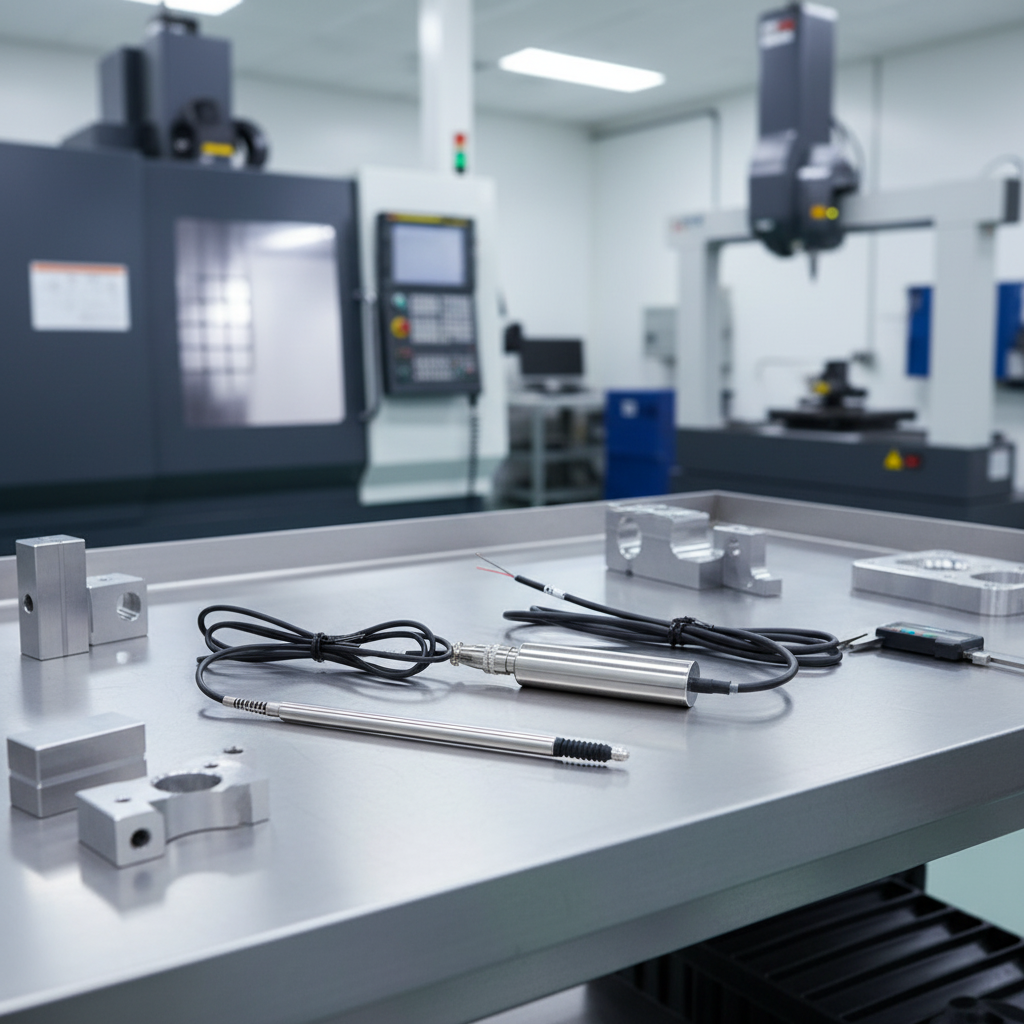
Third, the mainstream product classification (according to the structure and adaptation scenarios) Product type, core structure, characteristics and core adaptation scenarios Rebound (probe-type) LVDT has built-in constant-force return spring, and the probe can automatically expand and contract without rigid fixed connection, which can realize seamless follow-up measurement of precision workpiece size/thickness/flatness detection, shaft parts runout measurement, mold clamping detection, automatic equipment limit detection and product online quality inspection.
The rod-type (universal) LVDT iron core is rigidly connected with the measured object through the rod, with stable structure, wide stroke coverage, hydraulic cylinder/cylinder stroke feedback, valve opening control, lifting platform position monitoring, construction machinery displacement detection, machine tool equipment position closed-loop split LVDT coil body and iron core separation design, and flexible structure.
Small embedded scene with limited installation space, displacement detection in narrow cavity, customized installation of special equipment under special working conditions. Customized petrochemical underground equipment, nuclear power equipment monitoring, underwater operation equipment, wind power equipment and aerospace equipment with high temperature, high pressure, waterproof, radiation-resistant models can be customized.
Four, the core difference with the resistance rod electronic ruler (potentiometer) Comparative dimension LVDT displacement sensor measuring principle of electronic ruler with resistance pull rod Inductive differential transformer, non-contact measuring resistance sliding potentiometer, contact measuring, no mechanical wear, extremely long service life, almost no friction and wear between brush and resistor, poor contact, decreased precision and limited service life after long-term use.
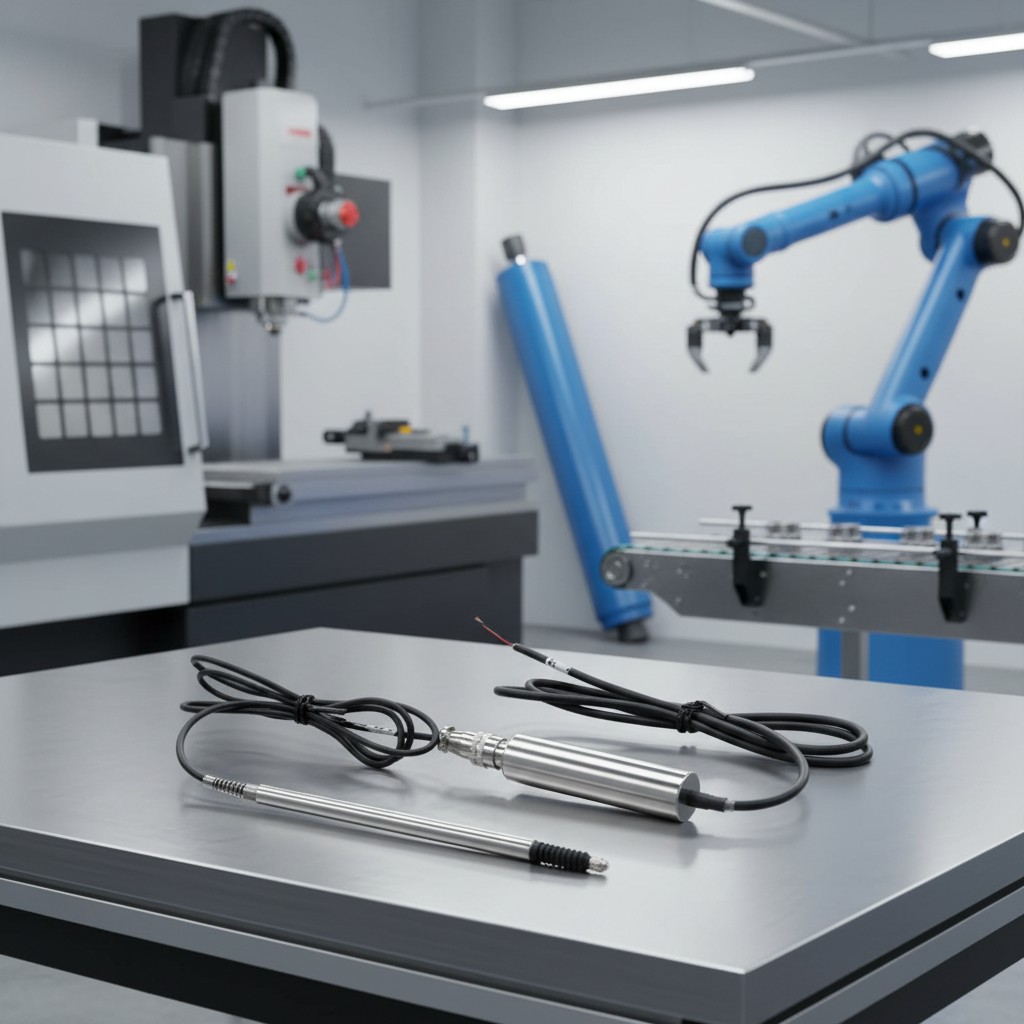
The measurement accuracy is ultra-high, with micron/submicron resolution, excellent linearity and minimal temperature drift. The resolution is mostly at 0.1%FS level, which is greatly influenced by contact resistance and temperature. It is environmentally adaptive, anti-vibration and anti-dust, and can adapt to extreme working conditions such as high temperature, It is sensitive to dust, oil and strong vibration, easy to be damaged under bad working conditions, and only suitable for normal industrial environment, with dynamic performance response speed.
The response speed of dynamic measurement that can adapt to high-frequency reciprocating motion is slow, and the wear is aggravated under high-frequency motion, so it is not suitable for high-frequency dynamic scenes, and the cost and popularity cost are relatively high. It is mostly used for precision measurement, and the cost and performance ratio are high in harsh working conditions, and the popularity of conventional automation scenes is extremely high.
Mainstream application scenarios
1. Precision manufacturing and quality inspection: 3C product size online detection, precision mold clamping monitoring, bearing/shaft parts roundness/end face runout measurement, micro-displacement detection of material testing machine, and precise positioning of semiconductor packaging equipment.
2. Industrial automation and construction machinery: closed-loop control of hydraulic cylinder/cylinder stroke, monitoring of sluice/valve opening, displacement detection of shield machine/mining machinery, position monitoring of lifting platform/elevator, and tool wear compensation of machine tools.
3. Energy and high-end equipment: nuclear power equipment safety monitoring, petrochemical downhole instruments, blade clearance monitoring of wind power equipment, attitude and displacement measurement of aerospace equipment, and detection of ship hydraulic system.
4. Scientific research and people's livelihood: fatigue testing of automobile parts, settlement/deformation monitoring of building structures, geological exploration equipment, biomedical precision instruments, and state detection of rail transit vehicles.