

Proximity Sensors: The Invisible Eyes of Modern Automation
Proximity Sensors: The Invisible Eyes of Modern Automation
In an era where automation and smart technology are reshaping industries, proximity sensors have emerged as indispensable components. These silent, invisible sentinels detect the presence or absence of objects without any physical contact, enabling machines to “see,” “feel,” and “react” to their environment. From the assembly lines of automotive plants to the sleek screens of smartphones, proximity sensors are the unsung heroes of the Internet of Things (IoT) and Industry 4.0. This article delves deep into their working principles, diverse types, critical applications, and the transformative role they play in our technologically driven world.
A proximity sensor is a non-contact electronic device designed to detect the presence of a target object within a defined sensing range. Unlike mechanical limit switches that rely on physical actuation, proximity sensors use electromagnetic fields, light, or sound waves to sense objects. They output an electrical signal—typically a simple ON/OFF (digital) or a continuous analog voltage—that can be read by a controller, such as a Programmable Logic Controller (PLC) or a microcontroller.
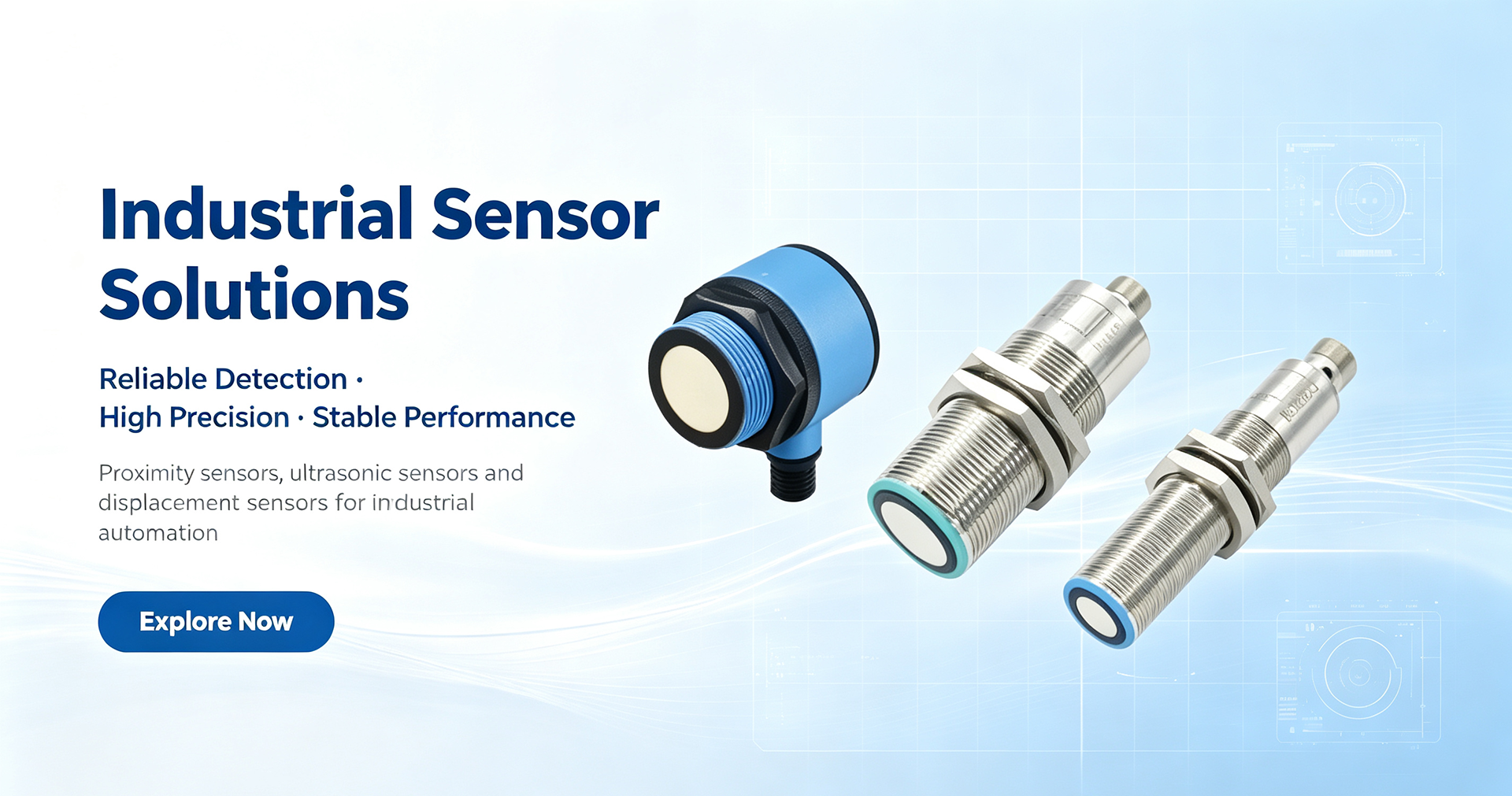 The Core Principle: How Do They Work?
While the output is straightforward, the underlying physics vary significantly across different sensor types. Here are the five most prevalent technologies and their operational mechanisms:
1. Inductive Proximity Sensors (The Magnetic Field Detectives)
Principle: These sensors operate on the Faraday’s law of electromagnetic induction. They contain an oscillator that generates a high-frequency electromagnetic field, which radiates from a ferrite core and coil at the sensing face. When a metallic target (ferrous or non-ferrous) enters this field, eddy currents are induced in the metal. These currents absorb energy from the oscillator, causing a reduction in the oscillation amplitude. The sensor’s signal trigger circuit detects this dampening and switches the output state.
Best for: Detecting metal objects. They are rugged, immune to dust and moisture, and offer high switching frequencies.
2. Capacitive Proximity Sensors (The Dielectric Observers)
Principle: These sensors generate an electrostatic field by applying a high-frequency oscillation to a metal electrode. The sensing surface acts as one plate of a capacitor, and the target (which could be metal, liquid, plastic, or granular material) acts as the second plate. When an object approaches, the dielectric constant of the medium between the plates changes, altering the capacitance. The sensor’s electronics measure this change and trigger an output when a specific threshold is crossed.
Best for: Detecting both metallic and non-metallic targets, including liquids, powders, glass, and wood.
3. Photoelectric Proximity Sensors (The Light Beam Sentinels)
Principle: These rely on the properties of light—usually infrared or visible red laser. They come in three primary configurations:
Through-beam: A separate emitter and receiver. The object is detected when it breaks the light beam.
Retro-reflective: The emitter and receiver are housed together, and a reflector bounces the beam back. Detection occurs when the beam is interrupted.
Diffuse (Proximity): The emitter and receiver are housed together, and the sensor relies on the target’s surface to reflect light back to the receiver. Detection occurs when the reflected light intensity exceeds a set threshold.
Best for: Long-range detection (up to several meters) and for sensing a wide variety of materials and colors.
4. Ultrasonic Proximity Sensors (The Echo Navigators)
Principle: These emulate the echolocation of bats. They emit high-frequency sound waves (typically 20 kHz to 200 kHz) that travel through the air. When these waves hit an object, they bounce back as echoes. The sensor measures the time of flight (ToF)—the interval between emitting the pulse and receiving the echo. Using the speed of sound, it calculates the exact distance to the object.
Best for: Detecting transparent objects (glass/plastic), liquids, and environments with heavy dust, where optical sensors may fail.
5. Magnetic Proximity Sensors (The Reed Switch Relics)
Principle: These are the simplest, often using a reed switch—two ferromagnetic reeds hermetically sealed in a glass tube. In the presence of a permanent magnet, the reeds pull together and close the circuit.
Best for: Detection of magnet-equipped targets, such as piston positions in cylinders, at very low cost.
Key Specifications: Choosing the Right Sensor
When selecting a proximity sensor for a specific application, engineers consider several critical parameters:
Sensing Distance: The maximum distance at which the target can be reliably detected.
Hysteresis: The difference in distance between the "switch-on" and "switch-off" points, designed to prevent chattering due to target vibration.
Switching Frequency: The maximum number of detection cycles per second.
Response Time: The time lag between object detection and the output signal change.
Protection Class: Ingress Protection (IP) ratings, such as IP67 (dust-tight and water-resistant) or IP69K (high-pressure washdown resistant) for harsh industrial environments.
The Expansive Universe of Applications
The utility of proximity sensors spans across virtually every sector. Let’s explore their critical roles:
1. Industrial Manufacturing & Assembly Lines
Counting and Conveyor Monitoring: Photoelectric sensors count products as they roll down a conveyor belt, ensuring accurate inventory.
Position Verification: Inductive sensors confirm the presence of metallic components, like bolts or gears, during assembly.
Machine Safety: Proximity sensors act as interlock guards, ensuring that machinery stops automatically if a safety gate is opened.
2. The Automotive Industry
Parking Assist Systems: Ultrasonic sensors, mounted on bumpers, measure the distance to obstacles, providing audible and visual warnings to drivers.
Anti-Lock Braking Systems (ABS): Inductive sensors monitor the rotational speed of wheels, sending data to the ECU to prevent wheel lockup.
Autonomous Driving: LIDAR (Light Detection and Ranging) systems, a sophisticated variant of photoelectric sensors, create 3D maps of the car’s surroundings.
3. Consumer Electronics & Smart Devices
Smartphones: Capacitive proximity sensors are ubiquitous. They turn off the touchscreen display when you bring the phone to your ear during a call, preventing accidental touch inputs and saving battery.
Automated Hand Dryers & Faucets: Capacitive or infrared sensors detect the presence of hands, triggering water flow or warm air automatically.
Robotic Vacuum Cleaners: A combination of infrared, ultrasonic, and bump sensors allows robots to navigate furniture, avoid falling down stairs, and map rooms.
4. Packaging Industry
Level Monitoring: Capacitive sensors detect fill levels of liquids or powders in bottles and silos.
Label Detection: Photoelectric sensors verify if a label has been applied correctly to a package before it is sealed.
5. Healthcare and Medical Devices
Infusion Pumps: Sensors detect the presence of the IV drip chamber and monitor for blockages.
Respiratory Equipment: Proximity sensors ensure proper placement of breathing tubes and masks.
6. Agriculture and Smart Farming
Drone Navigation: Ultrasonic and LIDAR systems allow drones to hover accurately over crops while maintaining a safe altitude for spraying fertilizers or pesticides.
Advantages of Non-Contact Sensing
The primary advantage of proximity sensors over mechanical switches is the removal of moving parts. This yields:
High Reliability and Long Lifespan: No wear and tear means fewer mechanical failures.
High Speed: They can switch at rates exceeding 5,000 cycles per second, far faster than human-handled operations.
Environmental Immunity: Many models are designed to operate in harsh conditions, including extreme temperatures, oil, dust, and vibration.
Precision: They offer micron-level repeatability, which is essential for micro-assembly.
Despite their sophistication, proximity sensors are not without limitations:
Material Dependency: Inductive sensors only detect metals; photoelectric sensors can be confused by shiny or highly reflective surfaces; ultrasonic sensors can be affected by wind or temperature gradients.
Temperature Instability: Capacitive sensors, in particular, can drift due to changes in ambient humidity and temperature.
Installation Constraints: Mounting requires consideration of "blind zones" (areas where the sensor cannot detect) and cross-talk (interference between two adjacent sensors).
The Future: Smarter and More Connected
The next generation of proximity sensors is deeply intertwined with digitalization. We are witnessing the rise of IO-Link sensors—smart sensors that not only deliver a switching signal but also provide diagnostic data, such as temperature, operating voltage, and signal-to-noise ratio. This enables predictive maintenance, where a machine alerts operators before a sensor fails. Furthermore, advancements in Time-of-Flight (ToF) cameras and solid-state LIDAR are pushing the boundaries of 3D imaging, allowing robots to perceive depth and texture in real-time, mimicking human vision.
Conclusion
Proximity sensors are a foundational pillar of the modern automated world. Their ability to translate the physical presence of objects into reliable electrical signals bridges the gap between the mechanical and the digital. Whether it is a simple capacitive sensor saving battery life on your phone, or a complex ultrasonic array guiding a self-driving car, these devices are proof that great technology often works best when it goes unnoticed. As the demand for automation grows, the evolution of proximity sensors—from analog signalers to intelligent, networked data providers—will continue to drive innovation across every facet of human endeavor.
If you are looking to upgrade your automation systems, investing in the right type of proximity sensor is not just a purchase; it is a commitment to efficiency, safety, and unparalleled precision.