

Features and Application Scenarios of M12 & M18 Proximity Sensors
Features and Application Scenarios of M12 & M18 Proximity Sensors
M12 and M18 cylindrical proximity sensors are the most widely used detection components in industrial automation control systems. Featuring non-contact induction and stable and reliable performance, they serve as core devices for equipment positioning and material detection. The models M12 and M18 refer to the thread outer diameter specifications of the sensors — 12mm and 18mm respectively. With a perfect size matching design, they adapt to diverse installation space and detection requirements for automated equipment.
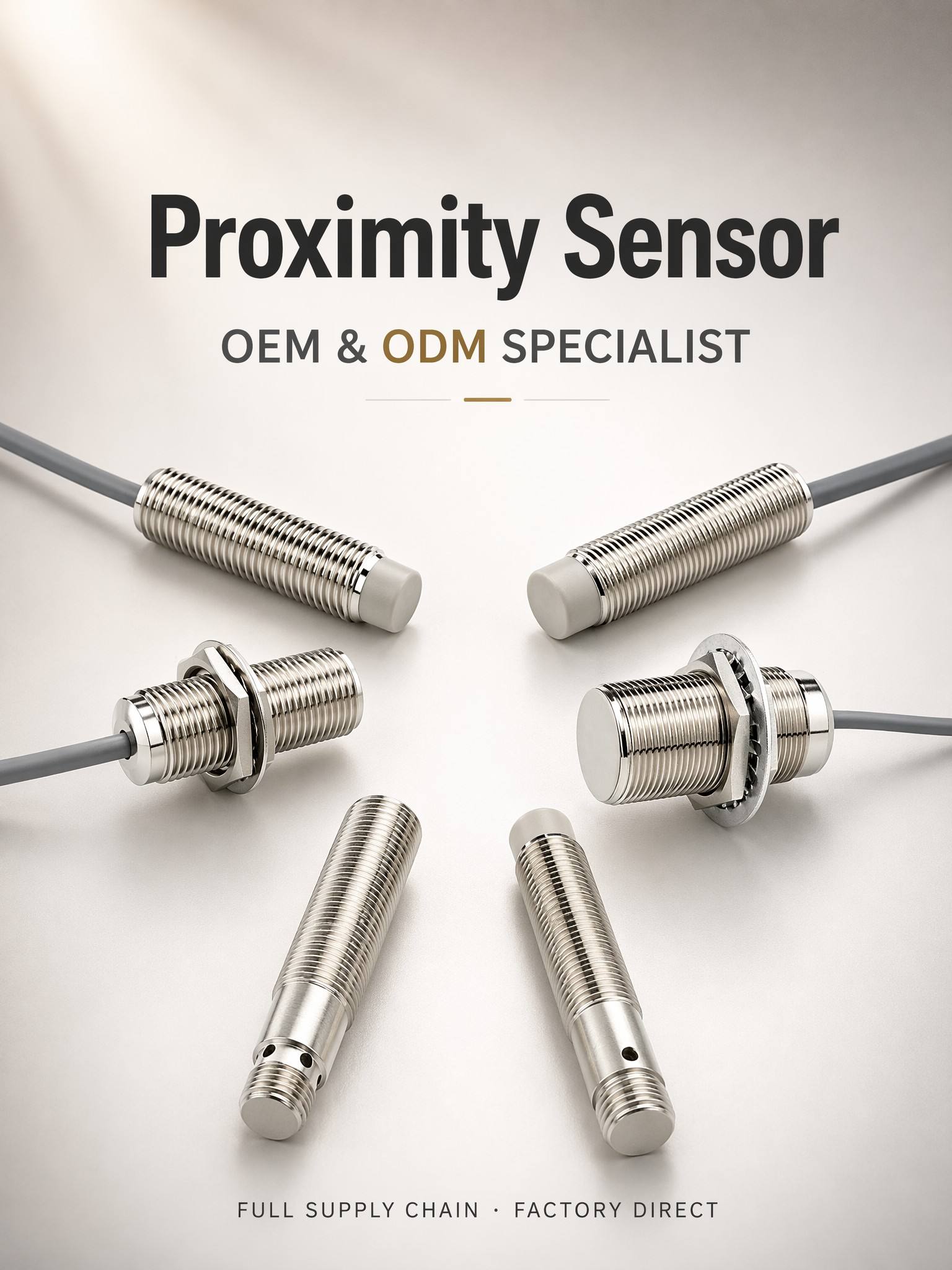
Most M12 and M18 proximity sensors adopt the inductive principle, which can output switching signals without contacting the detected metal objects directly. They share outstanding universal advantages. Made of nickel-plated brass or stainless steel housing with a standard cylindrical thread structure, the sensors are easy to install and fix with matching nuts. Boasting IP67 protection grade, they are dustproof, waterproof and oil-resistant, fully adaptable to harsh working environments with moisture and dust.
Equipped with no mechanical contacts, these sensors cause no wear and tear during operation, delivering fast response speed, high-frequency repeated detection capacity and ultra-long service life. They support multiple output types including NPN/PNP normally open and normally closed, compatible with mainstream PLC control systems. The built-in status indicator light enables intuitive and convenient debugging and maintenance.
There are obvious selection differences between the two models. The compact M12 sensor is suitable for equipment with narrow installation spaces, with a standard detection distance of 2 to 4mm. In contrast, the larger M18 sensor features a longer sensing distance of 5 to 8mm, providing larger detection margin and stronger anti-interference ability with higher universality. Most models support flush and non-flush installation to meet different mechanical layout requirements.
In practical industrial applications, M12 sensors are mostly applied to small automated equipment, manipulator fixtures, miniature conveyor lines, machine tool limit positions and small cylinder position feedback, prioritizing scenarios with limited installation holes. M18 sensors are widely used in assembly line workpiece detection, material counting, three-dimensional warehousing, packaging machinery, stamping equipment, fan and pump position monitoring, and automotive production line tooling positioning.
In addition, they are massively equipped in logistics sorting, rubber and plastic machinery, food processing equipment and sewage treatment automatic control devices. They realize core functions such as position confirmation, material shortage alarm, stroke limit and workpiece counting, effectively reducing mechanical collision failures and improving the overall automation level of production lines.
As standardized industrial accessories, M12 and M18 proximity sensors feature strong interchangeability and moderate procurement and maintenance costs. Selecting the appropriate specification according to actual installation space and detection distance can maximize sensor performance and ensure the long-term stable operation of automated equipment.