

Spoke-Type Load Cells: Types, Working Principle and Applications
Spoke-Type Load Cells: Types, Working Principle and Applications
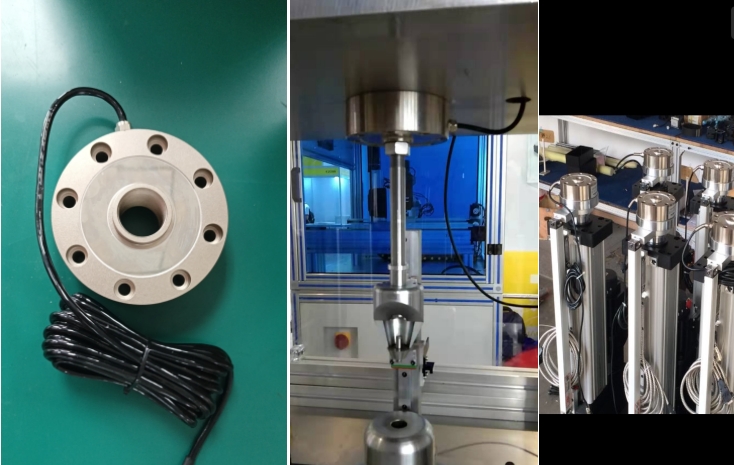
Spoke-type load cells, also known as pancake load cells, are high-precision force and weighing transducers widely used in industrial automation, manufacturing, and logistics. Featuring a low-profile, wheel-spoke structured elastic body, they deliver outstanding resistance to eccentric loads and side forces, ensuring stable measurement under heavy-duty and harsh conditions.
Working Principle with Practical Application Cases
The core working principle of spoke-type load cells relies on the strain gauge effect and Wheatstone bridge circuit technology. The sensor comprises a central loading hub, an outer fixed ring, and several radial elastic spokes made of high-strength alloy steel. When an external load or force is applied—whether vertical compression, tension, or lateral force—the elastic spokes undergo tiny, reversible mechanical deformation. Strain gauges, precisely bonded to the surface of the spokes, convert this physical deformation into a proportional change in electrical resistance. These strain gauges are integrated into a Wheatstone bridge circuit, which amplifies the weak millivolt-level voltage signal generated by the resistance change into a standardized electrical signal (0-5V, 0-10V, or 4-20mA) for precise measurement and display.
Two typical application scenarios illustrate this principle in action:
1. Silo Weighing System in Food Processing: A large food processing plant uses 8-inch diameter spoke-type load cells (with a 50-ton capacity) to support the bottom brackets of grain silos. When grain is loaded into the silo, the spokes compress under the vertical load, generating a resistance change that the sensor converts into a 4-20mA signal. This signal is transmitted to the industrial control system, enabling real-time monitoring of grain inventory. The sensor’s anti-eccentric load capability ensures accurate readings even when grain accumulates unevenly in the silo, avoiding production delays caused by inventory miscalculations.
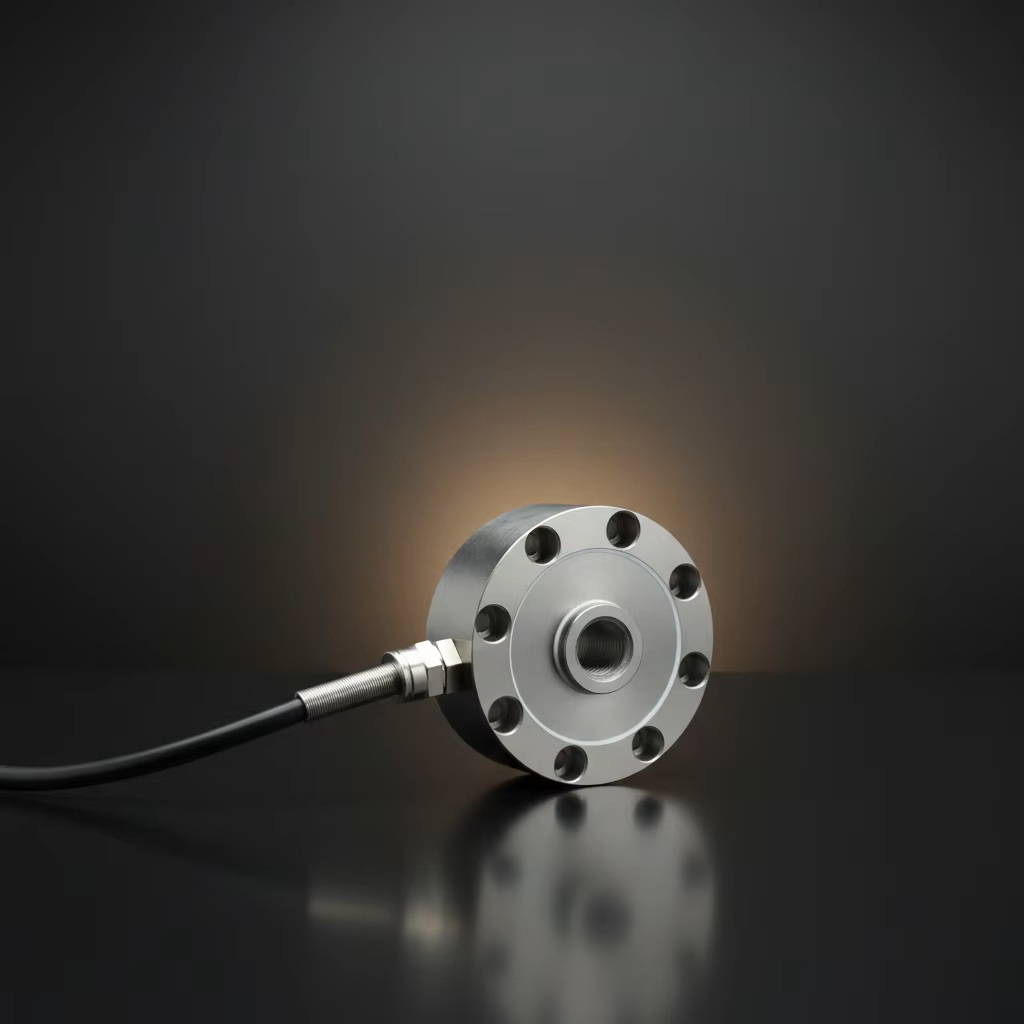
2. Injection Molding Machine Clamp Force Control: An automotive parts manufacturer equips injection molding machines with spoke-type load cells (100-ton capacity, compression-only type) to monitor clamp force. During the molding process, the sensor’s spokes deform as the machine applies clamping force to prevent mold opening. The strain gauges convert the deformation into a voltage signal, which the machine’s control system uses to adjust the clamp force in real time. This ensures consistent product quality and prevents mold damage, reducing scrap rates by 15% compared to traditional force monitoring methods.
There are several common styles of spoke-type load cells to meet different working demands. Standard compression-only models are the most popular, designed for vertical force and weight detection with capacities ranging from a few tons to hundreds of tons. Tension-compression dual-purpose models support both pulling and pressing forces, ideal for force calibration and material testing. Miniature spoke load cells feature compact size and light weight, suitable for equipment with limited installation space. High-temperature and explosion-proof versions adopt special sealing and alloy materials, enabling reliable operation in high-temperature, dusty, or flammable environments. In addition, flange-mounted and threaded types simplify installation and integration with various mechanical structures.
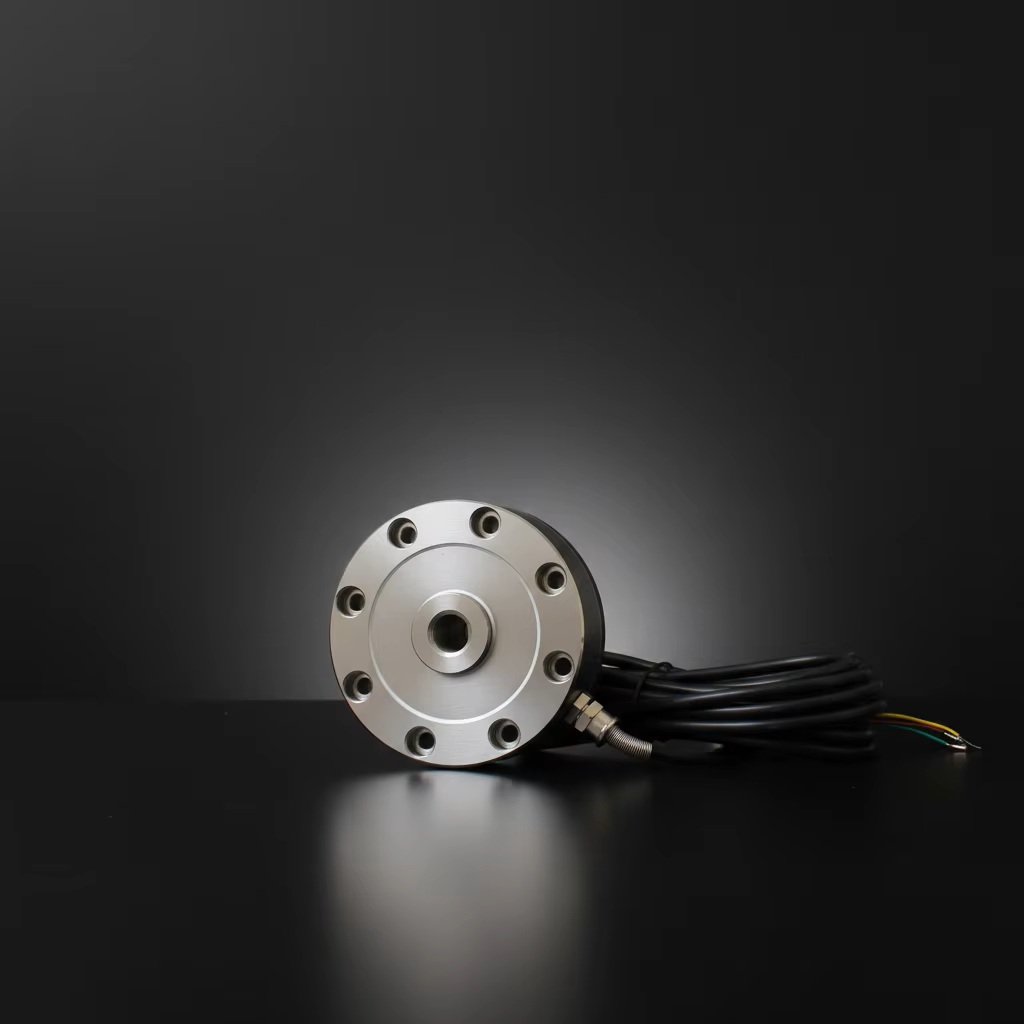
With a sturdy wheel-spoke structure, these load cells have high rigidity, good linearity and strong anti-bias load capability. Their low height and solid structure make installation and maintenance more convenient, while fully sealed design ensures long-term stable operation in complex industrial environments.
Spoke-type load cells are applied across numerous industries. In industrial weighing, they are widely used in hopper scales, silo weighing systems, platform scales, truck scales, and batching systems to ensure accurate material proportioning and weight monitoring. For manufacturing and process control, they measure clamping force in injection molding machines, pressure in presses, rolling force in steel mills, and assembly force in automated production lines. In testing and calibration, they serve as core components in material testing machines, force standards, and fatigue test equipment. They also play a key role in crane overload protection, engineering machinery monitoring, and structural stress detection in bridges and construction.
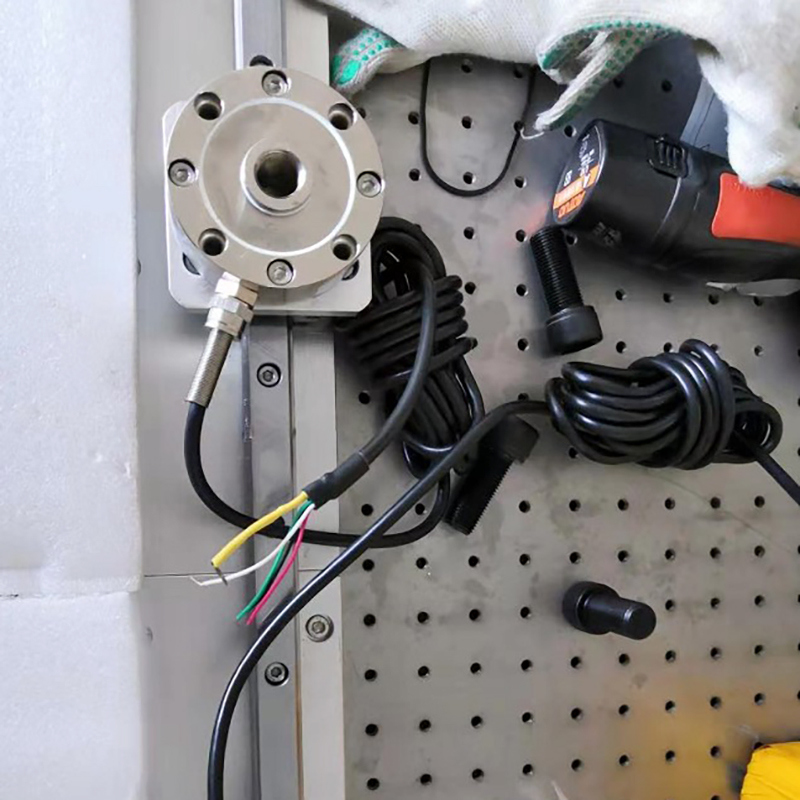
With reliable performance, clear working principle and strong versatility, spoke-type load cells have become essential components for precision weighing and force measurement, supporting stable and efficient operation of modern industrial systems.