

The application of high-pressure fans in different industries
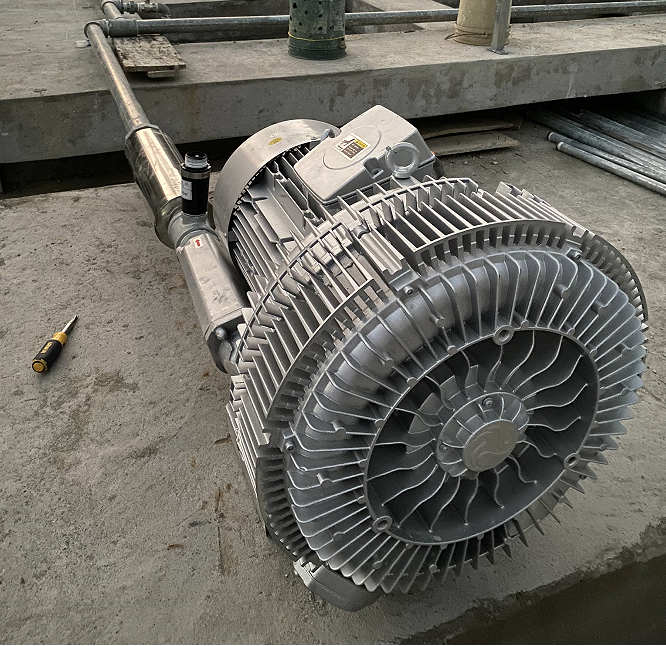
The application of high-pressure ring blowers in different industries
1. Environmental Protection and Wastewater Treatment Industry
This is the most fundamental and high-volume application field for high-pressure blowers, with the core function being "aeration".
Core Applications: Primarily used in the biological treatment stages (such as the activated sludge process, biological contact oxidation process) of municipal wastewater treatment plants and industrial wastewater treatment stations.
Detailed Working Principle: The blower delivers high-pressure air through pipelines to aerators (e.g., fine bubble diffusers, aeration tubes) at the bottom of the aeration basin, generating a large number of fine bubbles. As these bubbles rise, they serve a dual purpose: firstly, they provide the necessary oxygen for the metabolism of aerobic microorganisms (activated sludge), enabling them to efficiently decompose organic matter (BOD/COD) in the water; secondly, they create a stirring effect, ensuring thorough mixing of the sludge, wastewater, and oxygen.
Key Selection Criteria for Blowers: The required air pressure (to overcome water pressure) and air volume (to meet oxygen demand) must be precisely calculated based on pool depth, water quality, and treatment capacity. Roots blowers and air suspension centrifugal blowers are widely used in this field.
2. Industrial Manufacturing and Automation
This is a highly diverse yet critically important field, primarily utilizing the blower's characteristic of "generating a high-speed, stable airflow".
Pneumatic Conveying Systems:
Application Scenarios: Conveying flour, powdered sugar in food plants; plastic pellets, powder raw materials in chemical plants; cement in cement plants; pharmaceutical powders in drug factories.
Operating Modes: Divided into dilute phase conveying (low concentration, high velocity) and dense phase conveying (high concentration, low velocity). The blower provides the power source, moving materials through sealed pipelines, preventing dust leakage, and ensuring cleanliness and safety.
Drying and Cooling:
Bottle/Packaging Lines: Using high-pressure airflow to instantly blow dry residual water droplets or disinfectant on the surface and mouth of bottles/cans after filling beverages, soy sauce, etc.
Industrial Product Cooling: Forced air cooling of freshly molded plastic products, glass products, or metal parts processed at high temperatures to shorten production cycles.
Printing and Coating: Used for drying ink on printed surfaces or blowing dust off workpiece surfaces before spraying.
Combustion Air Supply: Providing sufficient, pressure-stable combustion air for small and medium-sized industrial boilers, hot air furnaces, smelting furnaces, etc., ensuring complete fuel combustion and improving thermal efficiency.
The principle is similar to aeration in wastewater treatment, but the goal directly serves "oxygenation and yield protection".
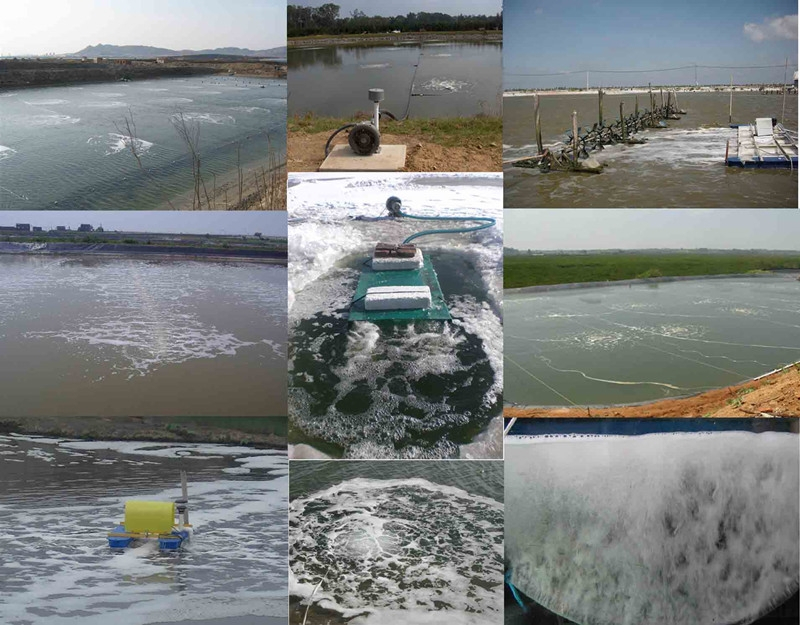
Detailed Applications: Widely used in fish ponds, shrimp ponds, sea cucumber culture ponds, and factory recirculating aquaculture systems (RAS).
Core Value:
Increase Dissolved Oxygen (DO): Directly increases the dissolved oxygen content in water, preventing fish from "surfacing" or even dying due to hypoxia.
Improve Water Quality: Promotes vertical convection in the water body, breaking thermal stratification; accelerates the oxidative decomposition of harmful substances (e.g., ammonia nitrogen, hydrogen sulfide) at the pond bottom.
Enhance Production Capacity: Allows for higher stocking densities, shortens the culture cycle, and increases yield.
Equipment Features: Often equipped with dedicated aeration discs/tubes or nano-aeration tubes installed at the bottom to achieve uniform oxygenation and low energy consumption.
4. Electroplating and Chemical Industries
In this field, blowers primarily serve the dual roles of "physical agitation" and "chemical oxygen supply".
Electroplating Tank Agitation: Introducing high-pressure air into the bottom of the electroplating tank creates a stream of bubbles that gently and uniformly agitates the electrolyte. This can:
Prevent excessive depletion of metal ions around the workpiece, leading to a more uniform plating thickness.
Carry away bubbles adhering to the workpiece surface, reducing plating pits.
Cause less damage to workpieces compared to mechanical stirring, especially suitable for precision parts.
Chemical Oxidation Processes: In certain chemical reactions requiring air as an oxidant (e.g., wet air oxidation processes), the high-pressure blower is responsible for continuously and stably compressing air into the reactor, providing the essential oxygen for the reaction.
5. Other Important Applications
Vacuum Adsorption (Reverse Application): Using the blower's suction inlet as a vacuum source, widely applied in:
Packaging Machinery: Holding cartons, labels, plastic films for positioning and feeding.
Printing Machinery: Feeding single sheets of paper.
Glass Processing: Holding and transporting flat glass.
Electronic Assembly: Holding precision components for placement.
Medical and Laboratory Equipment: Providing clean, stable air sources for dental units, respirator calibration equipment, laboratory pneumatic equipment, etc.
Car Wash and Cleaning: In high-end detailing, used for drying water residues in hard-to-reach areas like door gaps, locks, and engine bays that towels cannot access, preventing rust and water spots.
In summary, the high-pressure blower, as a versatile air power source, finds its application essence in utilizing controllable high-pressure air to achieve various physical and chemical processes such as oxidation, agitation, conveying, drying, and cooling. It is an indispensable fundamental piece of equipment in modern industrial production and environmental management. When selecting a blower, key focus should be placed on whether its pressure, flow rate, energy efficiency, noise level, and media compatibility match the specific operating conditions.