

The Symbiotic Relationship Between Sensors and Integrated Circuits: A Technical Overview
The Symbiotic Relationship Between Sensors and Integrated Circuits: A Technical Overview
Sensors and integrated circuits (ICs) share one of the most fundamental relationships in modern electronics. A sensor alone—whether it measures position, weight, or temperature—produces only a raw, weak, and often nonlinear signal. It is the IC that conditions, amplifies, linearizes, digitizes, and compensates that signal, transforming a physical phenomenon into useful information. This article examines the sensor-IC relationship across three common sensing modalities: linear position sensing, weighing (load cell) systems, and temperature measurement.
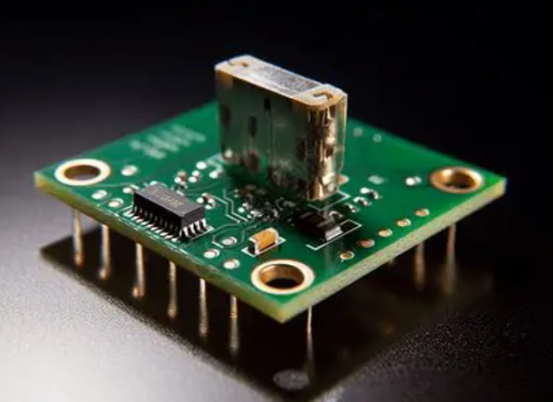
Linear Position Sensors and Their ICs
Linear position sensing is commonly achieved using Hall-effect sensors, which detect magnetic flux density and output an analog voltage proportional to the field strength. A linear Hall-effect sensor IC integrates a Hall sensing element, a linear amplifier, and output circuitry in a single package. The IC's role is not merely to detect the magnetic field but to provide temperature-stable, ratiometric output that varies linearly with displacement. Devices such as the S-5611A series from ABLIC feature fast response (1.25 μs), low noise, and programmable output voltage gain, enabling highly accurate position detection in both linear and rotational applications. These ICs process signals entirely in the analog domain, offering detection speeds far superior to DSP-based alternatives. For applications requiring even greater flexibility, inductive position sensor interface ICs such as the MLX90513 provide programmable linear transfer characteristics with 32-point correction, supporting both analog ratiometric and digital outputs.
Weighing Sensors (Load Cells) and Their Front-End ICs
Load cells are resistive bridge sensors—typically Wheatstone bridges—that convert mechanical deformation into a differential voltage, with typical sensitivities of 0.5 mV/V to 2 mV/V. The signal from a load cell is minuscule and requires substantial amplification, noise filtering, and analog-to-digital conversion. This is where specialized front-end ICs become indispensable.
The ADS1231 from Texas Instruments is a precision 24-bit delta-sigma ADC that integrates a low-noise amplifier with a gain of 128, an onboard oscillator, and a bridge power switch, providing a complete front-end solution for weigh-scale and load-cell applications. The amplifier supports a full-scale differential input of ±19.5 mV, and the ADC delivers 24-bit resolution with selectable data rates of 10 SPS (with simultaneous 50 Hz and 60 Hz rejection) or 80 SPS. Similarly, the HX711 is a widely used 24-bit ADC designed specifically for weigh scales, integrating a programmable gain amplifier (PGA) that enables direct interfacing with low-output sensors without external instrumentation amplifiers. For high-end industrial applications, the AD7730 from Analog Devices offers a complete analog front end with programmable gain, self-calibration, and offset drift of less than 5 nV/°C.
The IC does more than just digitize: it performs ratiometric measurements where the ADC reference voltage is derived from the same excitation source as the bridge, eliminating errors from supply variations. Advanced signal conditioners such as the MAX1454 also provide amplification, calibration, and temperature compensation—all in a single IC—enabling overall performance that approaches the inherent repeatability of the sensor itself.
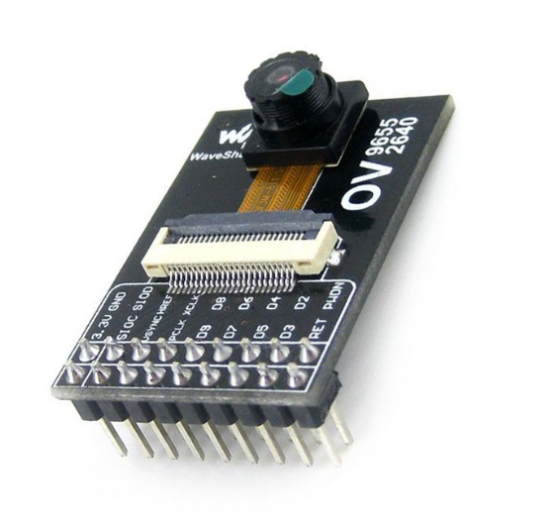
Temperature Sensors and Their ICs
Temperature sensing presents a different set of challenges. Traditional passive sensors—thermistors, RTDs, and thermocouples—produce nonlinear, low-level outputs that require external amplifiers, linearization circuits, and ADCs. Integrated temperature sensor ICs, by contrast, incorporate the sensing element and all necessary signal conditioning on a single chip.
These ICs fall into two broad categories: analog output and digital output. Analog temperature sensors such as the LM35 produce an output voltage that is linearly proportional to temperature (e.g., 10 mV/°C). The SGM450 is a high-precision linear analog temperature sensor IC offering ±0.5°C typical accuracy from 0°C to +85°C. Digital temperature sensors such as the DS18B20 integrate the temperature sensor, ADC, and serial interface, communicating temperature data directly to a microcontroller over a 1-Wire bus. More sophisticated "system monitor" ICs integrate temperature sensing with voltage monitoring, fan control, and programmable alert functions.
The IC's role in temperature sensing is twofold: it linearizes the inherently nonlinear response of the sensing element (or, in the case of silicon sensors, provides a fundamentally linear output), and it compensates for self-heating and other error sources. Advanced signal conditioners such as the MAX1457 can establish up to 120 piecewise-linear segments to linearize a sensor output to within 0.1% of repeatable error.
Conclusion
The relationship between sensors and ICs is one of enablement and enhancement. The sensor provides the raw physical interface; the IC provides the intelligence—amplification, linearization, compensation, and digitization—that turns a weak, noisy signal into accurate, actionable data. From linear Hall-effect sensors with integrated amplifiers to 24-bit delta-sigma ADCs for load cells to single-chip temperature sensors with digital interfaces, the IC is not merely an accessory to the sensor but an essential partner in every modern sensing system. As sensor signal conditioners continue to integrate more functionality—including on-chip calibration memory, temperature compensation, and diagnostic features—the boundary between sensor and IC will only become more seamless, enabling smaller, more accurate, and more cost-effective measurement solutions across automotive, industrial, and consumer applications.