
News
-
06-10 2026
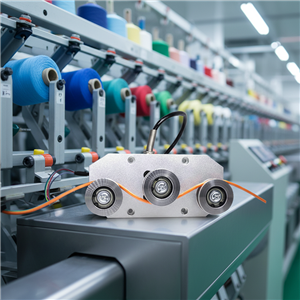
Main application scenarios of tension sensor in textile industry
Tension sensor is the core precision measurement and control device in textile automatic production. With its accurate tension monitoring and control ability, it can widely adapt to the whole textile process, solve the core problem of unstable tension of yarn and fabric in production, and is the key equipment to ensure fabric quality and realize intelligent mass production.
-
05-27 2026
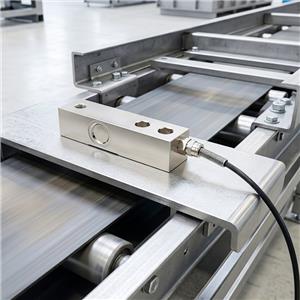
Cantilever Load Cells for Belt Scale Weighing System
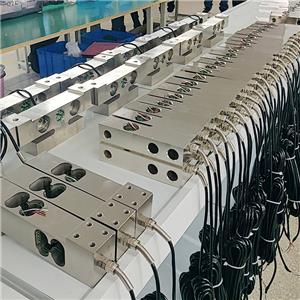
Cantilever load cells are dedicated core sensing components tailored for industrial belt scales, widely used for dynamic weighing of bulk materials in mining, construction, chemical, grain and processing industries. They serve as the key measurement core of belt conveyor weighing systems, directly dominating the accuracy, stability and consistency of real-time material metering and flow monitoring.
-
04-30 2026
Precision Without Friction: Why SOP Sensors Thrive Where Others Quit
-
04-27 2026
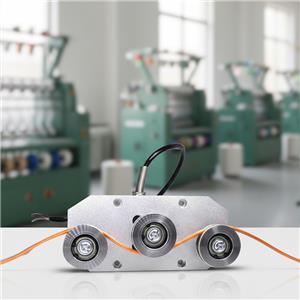
Application of Tension Sensor SOPZL-107 in Textile Industry
In the whole process of modern textile production, whether the tension of yarn and silk thread is stable or not directly determines the quality of finished fabric, production efficiency and raw material loss control. Three-roller tension sensor, with its accurate real-time tension detection and stable and reliable running performance, has long been an indispensable key equipment in textile weaving, spinning, warping, dyeing and finishing, laying a solid foundation for intelligent and high-end upgrading of textile industry. This three-pulley tension sensor is designed with a special three-point winding structure: the yarn passes through three groups of high-precision guide wheels, and the tension of the wire will be directly transmitted to the built-in high-precision strain measurement induction unit in the production process, and the mechanical tension will be converted into a standard electrical signal for output in real time.
-
04-20 2026
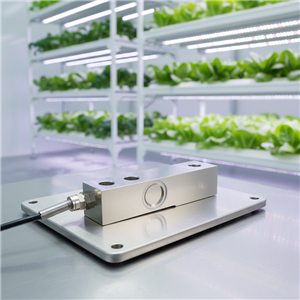
Application of Cantilever Beam Weighing Sensor in Vertical Agriculture
With the characteristics of high precision, anti-unbalanced load, compact structure and easy installation, cantilever weighing sensor has become the core sensing component of vertical agriculture to realize accurate water and fertilizer, growth monitoring and intelligent control, and is widely used in planting tank weighing, water and fertilizer ratio, yield monitoring and environmental adaptive control.
-
03-30 2026
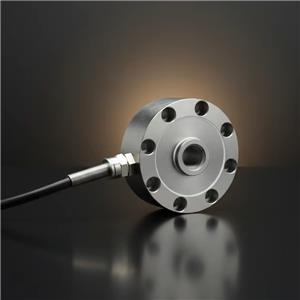
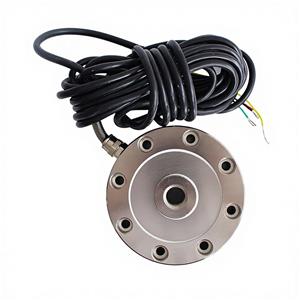
Spoke-Type Load Cells: Types, Working Principle and Applications
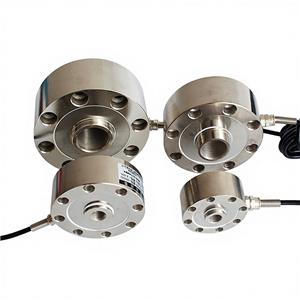
Spoke-type load cells, also known as pancake load cells, are high-precision force and weighing transducers widely used in industrial automation, manufacturing, and logistics. Featuring a low-profile, wheel-spoke structured elastic body, they deliver outstanding resistance to eccentric loads and side forces, ensuring stable measurement under heavy-duty and harsh conditions.
-
03-18 2026
What force sensors are commonly used in automobile industry?
As the "nerve endings" to perceive the physical world, the force sensor is reconstructing the underlying logic of vehicle performance and safety with micron-scale accuracy. From the engine room to the intelligent cockpit, from the production workshop to the monitoring of driving conditions, the force sensor becomes the core support of the whole life cycle of automobile manufacturing, testing and operation by converting mechanical stress into quantifiable electrical signals. This paper systematically sorts out the types of force sensors commonly used in the automobile industry:
-
02-08 2026
In-Depth Expansion of Weighing Sensor Technology: From Core Principles to Future Frontiers
Beyond traditional classifications and applications, the depth and breadth of weighing sensor technology continue to expand. The evolution of its core technologies and emerging application scenarios jointly sketch a richer industrial landscape.
-
01-28 2026
What should be paid attention to when purchasing load cell products?
In scenarios such as industrial automation, logistics warehousing, and food processing, weighing sensors serve as core metrological components, and their quality directly impacts the stability of equipment operation and the accuracy of data. However, the market is filled with a wide range of products, with inferior sensors often attracting buyers with low prices but suffering from material defects and rough craftsmanship, leading to reduced accuracy, shortened lifespan, and even safety accidents. Next, we will systematically analyze the pitfalls to be wary of when purchasing, covering dimensions such as technical principles, material craftsmanship, and performance parameters, to assist you in establishing a scientific selection logic.
-
01-27 2026
How to choose a load cell? Recommendations for suitable models for different weighing scenarios
The sensor range should cover the maximum weight of the object being measured, with a safety margin reserved. For example, when weighing industrial material tanks, the impact load of the material needs to be considered, and the range is usually 1.2-1.5 times the maximum load capacity. If the range is too small, overload may cause permanent deformation of the elastic body; if the range is too large, the resolution will decrease, affecting the accuracy of small weight measurements.